Astronaut Jim Lovell’s idea of heaven

undefined.jpeg

Yesterday, when speaking with a friend of mine about the 1960’s, he showed me this famous photo. “And to think,” he said, “that when Jim Lovell took this amazing photo of earth, we were there.” That thought was powerful for me. If you were born after December 4, 1968, perhaps your soul was still forming in the universe until ready for this magical sphere.

“You have to really kind of think about our own existence here in the universe. You realize that people often say, ‘I hope to go to heaven when I die,'” he said. “In reality, if you think about it, you go to heaven when you’re born.” – Jim Lovell

Read more here.

“Parent’s Corner: The Letter Your Teenager Can’t Write You” by Gretchen Schmelzer

I no longer have teenagers (thank God those years are over), but I realize many of you do or perhaps will soon. This “letter” is powerful and shows the emotions of struggling teenagers and what they need and want their parents to understand. I learned about this from a friend who has a teenager.

http://gretchenschmelzer.com/blog-1/2015/6/23/parent-corner-the-letter-your-teenager-cant-write-you


I just spoke to the Prez

He sent me this email. I know The Affordable Care Act has it’s issues. Still.

IMG_0807.jpgHere’s my response.

I should have asked him to tweet a response back. Something about blood coming out of my you-know-what. Dammit! Why do I think of these things later?!

I’m ashamed, and shocked

Emmett_Till.jpg

… but I don’t take full responsible for my ignorance. As you, my blogger friends and followers know, I have very little patience for the intolerance in our world. My belief system stands firmly planted to the principles of social justice, civil rights and equality. So, why did I just recently learn about Emmett Till? I’m curious. Have you heard of him?

I am currently living in 1963. While working on my new manuscript, I am researching various aspects of life in the 1960’s. Presently titled Olvie and Chicken Coop, teenager Grace Cooper tries to befriend a “Negro” boy who’s visiting from Alabama, but can’t understand why he is so stand-offish. (Not the whole premise of the novel but I’ll tell you more about that another time.) But my particular story line was set when research introduced me to Emmett Till. (I must have missed Bob Dylan’s 1962 song, The Death of Emmett Till)

I know about the Woolworth sit-in, Rosa Parks and the bus, the Freedom Fighters, etc.  I didn’t realize, but now know, that many African American’s moved from the south to Chicago to distance themselves from the John Crow laws — Chicago where they could walk with their heads held high.

I was shocked to learn that this fourteen-year-old boy, who travelled from Chicago to Mississippi in 1955 to visit relatives, never made it back home and the mortifying reasons why.

This boisterous, self-assured young man, didn’t know the “rules” of the south at the time. In some disputed way, either by words or by wolf-whistling at a married white woman, Emmett Till was hunted down by the man’s wife and his half-brother for flirting with a white woman. After being terribly brutalized, Emmett’s body was discovered in the river. The murders were acquitted and set free.

God Bless You, Emmett Till, a kid with only candy in his pockets.

And, ironically, just over a month ago, Emmett Till’s accuser admits she lied. Time to clear her conscience?

For more about Emmett read here.



Where Poems live

scan 2.jpg

CD-W


There’s a place were poems live

a secret place well hidden

away from the madness

away from the strangers

where life, with all it’s twists and turns, flourishes and grows.

The place where poems grow

is a never ending pasture

where little sprouts are watered and pruned

waiting to be nurtured waiting

to be harvested by the author.

If I could, I’d spend more time in that pasture

I would feel the creative winds kiss my cheeks

and smell the air left behind from inspiring rains

I would listen to the seasons and taste the warmth of words upon my tongue.

I visit there sometimes

I twirl and dance and run and play

And when I’m tired

I lay on the green and stretch my arms toward the sky

I twirl the clouds around my fingertips

and smile at their tickled laughter

All in that secret place

where poems live.

      – CD-W

Feeling sad about aging? Why? You’ve never been this age before.

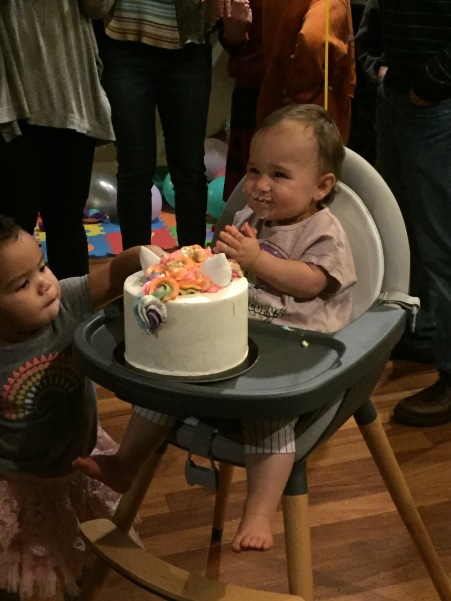
We all have our time. I used to be a one-year-old. Not anymore. Now, it’s my granddaughter’s turn to experience that year.

IMG_0754.jpg

At her birthday party, I had a wonderful conversation with a friend I rarely get to see. First, we talked about her aging mother. Then we talked about our kids. Her’s are 13 and 11. Mine are 23 and 27.

Kristin’s already missing her aging and ill mother. She talks about what will happen when her growing boys leave the nest. Her eyes puddle with tears.

And then I told her what I tell myself when I feel like so much of my life is formed of memories, of cycles of life that have concluded.

“I have been a one-year-old,” I say. “Now it’s my granddaughter’s turn. I have been a two-year-old. Now it’s my grandson’s turn. I have been a mother of young children, fortunate to have watched them grow and thrive. Now, it is my children’s turn to experience parenthood. But, I have never been sixty before. This, too, is a new cycle. And who knows what will happen.”

We all have our time.


A Boxing Tradition-Thanks, Daddy

So recently, my one-year-old granddaughter came to watch me box (see picture below). As many of you know, I love boxing. Not competitively, of course. I do it for fitness. We hit pads and bags, practice defensive, etc. We kick, too, but being a good kicker is not in my DNA. Let me explain.

My paternal grandfather was a carnival boxer in the early 1930’s. That meant he would seek out the carnivals and would box the “main” contender. If he won, which he usually did, he earned 5 buckeroos.

In the later 1940’s, my Dad boxed for the Army as Kid Dennis. I still have his boxing bag, gloves, and trunks that read “Kid.” (The story of Dad’s boxing retaliation against my grandfather is a major plot thread in my novel, No Hill for a Stepper.)

Dad quit boxing when he married my mother but continued the sport by becoming a referee. When my sister was born, he gave her little blue boxing glove rattles. After my parents died, and when my sister and I had to sort through the house, I found them! I told my sister, “I’m keeping these!” (she didn’t fight me for them).  Now, I keep the little rattles in my boxing bag for inspiration.

Here’s my granddaughter holding one of the little rattles.

IMG_0335.jpg

Baby and Me

Do I think my granddaughter should continue the tradition? It matters not. What does matter is that she learns to defend and stand up for herself. And, as Dad often reminded me, “pay attention to your surroundings at all times.” Sound advice.

Thanks, Daddy.

“20 diversion tactics highly manipulative narcissists, sociopaths, and psychopaths use to silence you”

“Toxic people such as malignant narcissistspsychopaths and those with antisocial traitsengage in maladaptive behaviors in relationships that ultimately exploit, demean and hurt their intimate partners, family members and friends. They use a plethora of diversionary tactics that distort the reality of their victims and deflect responsibility. Although those who are not narcissistic can employ these tactics as well, abusive narcissists use these to an excessive extent in an effort to escape accountability for their actions.

Here are the 20 diversionary tactics toxic people use to silence and degrade you.”

Here is the link to this outstanding article.