A Baby Girl Sock Without the Baby Girl

Screenshot 2017-05-03 09.21.52.png

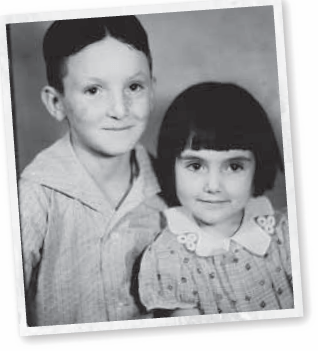
Cono (my father) and his sister, Delma

Mother’s holding Delma in her skinny arms, and Dad walks toward them. He’s clenching his jaw, which makes his brown eyes look black. He looks different, like something bad is about to happen.

“What’re ye doin’, Wayne?” asks Mother. Dad doesn’t answer. He just keeps walking up to the porch.

“Wayne?” says Mother again. Dad snatches Delma right outta her arms, turns back around, and starts walking back to the car he had borrowed. Then all hell breaks loose.

“Wayne, what the hell do ye think you’re doin’?” says Aunt Nolie.

“It ain’t  None of yer concern, Nola,” says Dad just as calmly as if he was taking a sack of groceries to his car instead of my whimpering baby sister.

Mother cries and pleads with him to bring Delma back. She follows on his heels, pulling on his sleeve, but he shakes her off like a horsefly. When Dad puts Delma into the car, Sis starts crying too. I know she must be as confused as we are. She never goes anywhere without Mother, and now she’s watching her Mother cry and try to get to her. She’s watching me, too. I’m helpless. I can’t move. I can’t do nothing.

Dad leaves, and I can hear my baby sister crying for me to come rescue her, but I can’t. I just stand there, holding on to Mother’s skirt. Mother’s holding on to Aunt Nolie’s arm.

“That crazy son of a bitch,” says Aunt Nolie.

“I hate his guts,” sobs Mother.

Right then and there, so do I. I hate him. He has taken my little sister and left my mother’s arms raw from the friction of loneliness.

Excerpt from No Hill for a Stepper, my father’s story

Campout over

screenshot-2016-08-02-08-55-26

It was dark, like now. Miss Helen had laid out the sleeping bags. Mama had set the sandwiches and cookies she’d made in the center of a picnic cloth.

After Mama and Miss Helen had gone inside the house, Scoot and me were fine for a while. We settled in to the hum and thump of the distillery until I realized the machine was so loud, I wouldn’t be able to hear danger if it came sneaking up on us. Maybe if Choppers had been there. But he was still recovering and getting used to his missing leg.

All that day, Scoot had been excited about camping out. That’s why I didn’t tell him I was spooked. I looked up through the gaps in the trees and watched the clouds as they moved across the half moon like Blankets trying to cover a small bed. Then it got darker. The owl hooted. When we both saw its eyes, yellow and mean, Scooter said it first. “Campout over.” Then he got up and walked inside with the sleeping bag over his head.

I’m not afraid of the dark anymore. I’m not afraid of untold secrets, either. “I’m afraid for Scooter,” I tell Frank.

Excerpt from The Moonshine Thicket set in 1928


Driving home from the hospital

Unknown-2.jpeg

We’ve only been waiting a few minutes when Tanner pulls the green and white Pontiac up to the front of the hospital. He hops out of the car, his teeth glistening in the dim light of dusk. Soon, I’ll be the one who makes his smile go away.

He opens the passenger door for Olvie. “Miss,” he says, ushering her inside like a real chauffer.

“How many dents and scratches did you put on Pontiac?” she says.

“Only one.” He smiles. “Buffed out easy as pie.”

Olvie lets out a hoomph. “Think you’re funny, don’t you Wise Guy?”

“Yes’m. Sometimes, my funny bone pops out an’ jes’ makes the white folk laugh.”

“Stop talking like Elias. Your uncle thinks he’s living on some plantation in Mississippi picking cotton for his Master.”

Tanner starts the car and pulls away from the hospital. “Uncle Elias’ Roots are still in his ancestors cotton field. And it’s Massa, not Master.”

I catch Tanner smiling at me through the rear view mirror.

“Don’t you dare stink up my car with slave dialect,” Olvie snarls.

“As long as you don’t dress me up in a moo-moo or as an Injun.”

“Don’t be crude, Wise Guy. I’ll have you know that Fritz is no ordinary Indian.”

“That’s for sure,” Tanner mutters.

Olvie huffs. “He’s an Indian Chief, and don’t you forget it.”


“How do you know Fritz likes being a Chief?,” he continues. “Maybe he just wants to be a mannequin.”

“Why you!” Olvie squeaks.

“Okay, maybe he liked being a Churman and wearing those lederhosen.”

“Shows what you know. The German Fritz got tired of thinking about the damn Nazis’.”

If I hadn’t watched the news, hearing their banter would have put me in a state of euphoria. Tanner seems totally happy, almost like a new person. But, knowing what I know, nothing in the world is funny.

Excerpt from my Work in Process, Olvie and Chicken Coop (working title), set in 1963 during segregation.

Pictures that don’t match up

Screenshot 2017-04-25 09.49.21.png

I look in my duffle bag and see the sparring gloves Colonel Posey lent to me yesterday He had looked tired to me, like a man defeated from grief but who was still trying to stand up straight. His hair was Graying, and his eyes had lines at the corners like a map of a busy town. But his kindness sat on my chest like Pa’s and Ike’s kindness, stayed there perched like a redbird.

I thought about when Colonel Posey’s little daughter had died six months back from some disease the doctors didn’t know how to cure. I thought about Ervin Clay Carter and Gene Davis, them being dead and how hard it was on their parents and, maybe, how hard it was on me. They were just kids and life had sucked the air out of them easier than sucking a chocolate malt through a thin straw. Then I thought about Private Henderson.

After I’d told Colonel Posey about sparring with my father he said, “You know, whatever picture you’ve formed in your head about sparring with your father might not be what really happens.”

I knew what he was talking about. I thought of other pictures I’d made up in my head that didn’t match the truth, like working on that pipeline. That picture wasn’t anything like what happened. I thought of more pictures from long ago, like me owning my own guitar, or having a real conversation with my dad, or being able to reach my .22.

Haters

I can’t see anything out of the ordinary, only Olvie’s backyard. But I hear it. Words my mother has heard slammed in her direction.

“<N…> lover!” the boys chant.

Five of them emerge from the backyard bushes and run towards the front yard.

I grab a frying pan and head for the front door.

“Cooking out tonight?” Olvie says.

I ignore her and run outside.

Boys scramble in the cab and the back of the pick-up truck and shoot me the bird. Kent, the last one in, glares at me. “Beam that Fry pan over your own head, Grace. You’re not thinking straight.”

They peel off. Hearing the frying pan slam the sidewalk gives me a bit of satisfaction. But not enough.

“Chicken Coop?”

Olvie stands on the porch, her eyes pinched and curious. “Somebody got shot?”


The damp cloth feels good on my forehead, but I could forego Gladys’ positioned arm against mine.

“Want me to call that imbecile Garvey?” Olvie says sitting next to me on the leopard skin couch.

I shake my head. “He couldn’t do anything anyway. Name-calling’s not against the law.”

“So, who were those ragamuffins?”

“I only know one of them. They called me a <n….> lover.”

“Next time,” she says, “Don’t be so stupid. Pull out the cast iron skillet instead of that cheap enamel one. No, never mind that. You’re too scrawny to lift it. Be best if you grab the baseball bat under my bed. But if you swing it, don’t miss.

“I don’t want to be violent,” I say, trying to sound like my parents.

“You hear what I said? Don’t miss.”


The unenlightened neighbor

till.jpeg

Olvie pours herself another cup of Folgers while I start the pancake mix. “I think that was the door, Olvie.”

“Come in, Wise-Guy,” Olvie yells.

“Well, that was pleasant,” Tanner says, wearing a clean pair of “underground” railroad pants.

I pour circles of batter into the hot skillet. “What?”

“Man came charging toward me from across the street. Said I didn’t have any business being here. Guess he doesn’t like Negros.”

“Asshole,” Olvie mumbles.“That’s because he doesn’t like himself, that stupid son of a bitch.”

Pondering her words, I wonder if Olvie is really smarter than the rest of us. Mom and Dad told me people are often scared of things they don’t understand. And instead of trying to figure out what they’re afraid of, they resist anything new, anything different. Mr. Roberts must not have any Negro friends. If he did, he wouldn’t be afraid of a teenage boy.

“What did you tell him?” I ask.

“Nothing. I ignored him.”

“Why’d you do a thing like that?” Olvie says. “Should have told him off.”

“And why would I do that?” he says. “I don’t want trouble.”

Olvie huffs. “You sound like your uncle. ‘Don’t wants to cause any trouble, ma’am. Yes’m, anything you want, ma’am. Ain’t no good stirring the pot, you see.’ Ugh.”

“You think Uncle Elias should stand up for himself? Like I told Chicken Coop, he’s old school. He’s still afraid of the white man’s world.”

“Oh, and you’re not?” Olvie says.

“Oh, yes’m, I is alright,” he says in dialect. “Jes’ try nots to show it.”

Olvie stops in mid Chuckle. “Elias still thinks garlic hanging over a bed will cure a cold. If you tell him otherwise, he won’t listen. Speaking of, how’s that finger, Wise Guy. Need me to chop it off? You hung those tools up real nice in the utility room. I can find my saw easy now.”

Tanner squeezes his hand. “No thanks. Think I’ll hold on to it for a while.”

This makes Olvie laugh. She has a good laugh, one I’d like to hear more often.

Excerpt from my work in progress set in 1963.


NOTE: The photo is of Emmett Till who reminds me of my character, Tanner Ford. This novel will be in honor and memory of Emmett.

Climbing out of Guilt

Screenshot 2017-04-14 09.19.29

Cono Dennis, my father, at age 18

I still think it’s a crying shame that I had to spend so much time thinking it was my fault. I guess that’s what we do sometimes, take the blame for things that just aren’t our fault, especially when we don’t know any better. But back then I didn’t have a Colonel Posey to tell me any different.

Last week on the base, that responsibility was especially tough, and I don’t feel much like I lived up to it. I was right in the middle of running a training exercise when a young private missed the rope leading down from the

I still think it’s a crying shame that I had to spend so much time thinking it was my fault. I guess that’s what we do sometimes, take the blame for things that just aren’t our fault, especially when we don’t know any better. But back then I didn’t have a Colonel Posey to tell me any different.

Last week on the base, that responsibility was especially tough, and I don’t feel much like I lived up to it. I was right in the middle of running a training exercise when a young private missed the rope leading down from the Climbing wall. He fell fifteen feet to the ground, landing wrong. We all ran over and circled him like a bunch of buzzards.

“Sergeant Dennis,” he says, “My neck. I don’t feel so good.”

“Aw, you’ll be all right son,” I told him. “They’re coming to take ye to the hospital. You’ll be all right.”

But he wasn’t. Private Henderson died later that day.

So far, almost every night since then, I imagine him lying there on that hard ground, his eyes staring into mine with confusion and fear. I’d lied to him.

Colonel Posey told me I had done nothing wrong, that it wasn’t my fault Private Henderson had died. He told me I was the best sergeant he’d had so far, told me how he appreciated me. I looked at him for a second or two until all the guilt flew off my shoulder like specks of dirt in a windstorm.

Excerpt from No Hill for a Stepper, my father’s story

Crazy Olvie wants things timely

Before Olvie gets a chance to say anything, I stare at this boys black and white railroad pants and the oversized sports coat that covers part of his white t-shirt. His black hair is cut short, but it’s curly. Not straightened like some Negros I’ve seen downtown around Congress Avenue. He gets closer. His expression sits somewhere between shame and anger.

Tanner’s not a grown-up. Maybe somewhere around my age, but it’s hard to tell since he’s not much taller than me.

Mr. Ford clears his throat. “Mrs. Monroe, this here’s my nephew, Tanner Ford. My sister’s son. Came here from Alabama for a visit.”

“So? Why would I care?” she says, rude like always.

“Miss Monroe,” Tanner says, his eyes downcast. “I threw that rock. I plan to get a job here while I’m visiting. I’ll pay for it.”

The only part of Olvie that moves is her mouth when it drops to her chin.

While we wait for Olvie’s voice to return, I say, “I’m Grace Cooper. I’m staying here until my folks get back from—”

“Overseas,” Olvie says. “And you will address me as Mrs. Monroe. You hear? ”

Tanner looks at his uncle and squints like I did when Mom told me about Olvie. Although she’d never been married, she pretends to everyone that she had.

“And before you ask, I’m not kin to Marilyn Monroe,” she say. “She’s been dead a year now and I’m still here.” Olvie finger-poke-poke-pokes his chest. “And you’re damn right about paying me back. I don’t like having my little house look like a shanty with cardboard windows. Next thing you know, some people will think it’s okay to throw appliances on my front lawn. And, you gave this girl quite a shock. I was afraid I’d have to sit up with Chicken Coop last night so she wouldn’t have nightmares. Such a shock for this poor girl. That’s right.” She turns to me. “Might still have to sit in your room till you go to sleep, right Chicken Coop?”

I shrug at her foolishness. She knows better than anyone how we have our windows broken all the time. A lot of pissed off folks don’t like my parent’s beliefs on Civil Rights.

I look at Tanner. He’s got the brightest green eyes I’ve ever since on a human being.

And all that glass I had to pick out of Gladys’ wig, poor thing.”

When Tanner looks puzzled, Mr. Ford whispers something in his ear. Probably reassuring him that Gladys isn’t human.

Come to think on it,” Olvie continues. “You can start tomorrow. My utility closet needs sorting. You’ll do it for free, of course.”

“Okay,” Tanner says.

Mr. Ford gives Tanner a soft thump to his arm.

“Yes, ma’am,” Tanner says.

“First thing in the morning. And I get up at seven.” Olvie looks up. “Oh, wait just a gosh darn minute. You’re not in some kinda trouble are you?”

From my work in progress set in 1963.

Timely

Unraveling the meaning of “an eye for an eye”

Screenshot 2017-04-11 09.20.36.png

Young Cono Dennis

Mr. Pall thinks he’s tougher than a pair of old leather boots, probably because he used to be some kinda wrestler or something. He isn’t nearly as tough as Dad, who last week had beaten a man unconscious on Main Street just because the man spouted off to him. I walk into his office, where’s he’s sitting behind his desk looking puffed up with importance.

“Cono, were you smoking in the schoolyard?”

“No sir, I wadn’t.”

“Were the Allridge boys smoking?”

I think, Why didn’t ye just call them in here like you’ve done me?, but I don’t say that. Maybe it was Mr. Pall’s brother-in-law, who Dad had beaten up last week.

“I have no idee, sir,” I say. “I reckon you ought’a ask them.”

His right eye stares a hole in my left eyeball. His left one kinda wanders around on its own, like it’s been punched one too many times. Maybe he grunts with Mrs. Berry on occasion.

He opens up his desk drawer and pulls out a rubber hose. He thumps it on the desk a few times and says, “Well, I need to whip you with this hose.”

I stare back into his bad eye with both of my good ones and say, “Go ahead, sir. But I jes’t half to tell ye that my daddy said if you ever laid a hand on me, he’d have to come up here and whup you.” I say it real nice though.

He sits real quiet in his principal’s chair, like he’s picturing himself drawing a crowd on Main Street while my dad beats the tar outta his one good eye. While he’s chewing on that idea like a piece of gum, I’m busy staring at him, thinking that his front teeth stick out so far he could eat an apple through a keyhole. After that picture in my mind, I’m not scared one little bit.

Finally, he says, “Git on outta here, Cono.”

“Yes, sir,” I say, ’cause there’s no sense in not being polite.

At lunchtime I’m eating my sandwich, minding my own business, when Tommy scopes me out and says, “Cono, what’cha got fer lunch?”

Even though he’s five times bigger than me I say, “It don’t make no difference ’cause ye ain’t getting none of it.”

“Cono, you shouldn’t a’ stuck that knife in me that time.”

I look up at him with a face as serious as Dad’s and say, “Tommy, if ye mess with me in any way, shape’r form, I’ll cut yer head plumb off with the same pocketknife I used before.”

And just as I’m picturing his dead body without a head like Wort Reynolds, Tommy Burns walks away.

School’s out for the day, and it was another discouraging one. I grab Delma’s hand and start walking back home, now having a little time to think about what happened.

The Allridge boys had been smoking like a bunch a chimney stacks, but I ain’t one to rat on somebody else when it’s none of my business. And, I like to think that Dad would beat the tar outta Mr. Pall if he laid a hand on me. But Dad never said that. If Dad ever finds out that I lied, I might as well curl up in a ball and prepare myself—or maybe just grab my axe.

Lying isn’t always a bad thing. Sometimes, we have to lie in order protect ourselves and the people we care about.

An “eye for an eye” is what I did today. Maybe that part of the Bible makes sense after all.

From No Hill for a Stepper, the story of my father growing up in poverty during the Great Depression.

Unravel

Don’t listen to them

How can you Heal when:

they say you’re too fat or too thin–

they ask where you’re going and where you’ve been–

they say you’re too loud or too meek?–

But if you step away from critique–

Then you win.

IMG_0939.jpeg

painting by me