Words from my Emma June

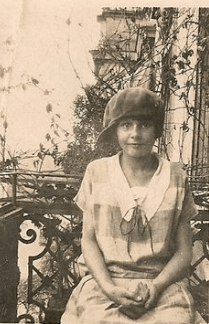
Eleven year-old Emma June from The Moonshine Thicket says:

And then I remember. Betty had told Mama her husband died. Frank said his Daddy left. Betty Bedford lied to Mama. She’s a low down, no-account, good-for-nothing, loose-knee-ed, tarty, liar-mama.

I picture walking up to Betty’s shabby-shack and knocking out her teeth when she answers the door.”

screenshot-2016-08-02-08-55-26


Daily Prompt: Tart

Getting to the point

images-8

My blog posts are and will be short. I know, they’re supposed to be and I like it that way. I don’t have to spend years writing one.

My books on the other hand…

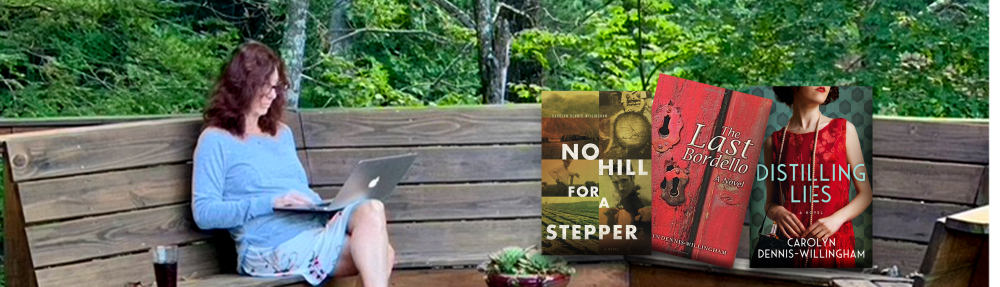
Geez! It took me three years to write No Hill for a Stepper and five to write The Last Bordello.

So, now that I’m getting older, who would have thought  I could speed along at a faster pace?

unknown-4


You see, I started my new book, The Moonshine Thicket, this summer.

IT’S DONE!

Well,  except for … you know, that thing called Ed-I-Ting.

images-7

Eerie is researching an Insane Asylum

via Daily Prompt: Eerie

Beginning in 1889, the Southwestern Insane Asylum thrived in San Antonio. The facility occupied 640 acres and could hold 500 patients.

th-30

Excerpt from The Last Bordello:

“Ticktock, ticktock, they’ll put you under key and lock,” she’d said. Lucinda had made good on her threat.

Too skinny from institution mush, my skin peeled off a layer at a time. Curled on top of a thin, lumpy mattress on a rusted bed frame, I traced the scratches on the wall made by another’s bloodied nails, the dark red stains proof of another’s determination to escape a world unworthy of its inhabitant.

Earlier, the attendant had pushed my forehead back and forced open my jaw. Unnecessary effort on his part. The medicinal haze thickened. I found myself calm but without spirit.

Strange how I felt erased, yet without the rubber remnants to remind me I once existed.

Any bits of green paint that had remained on the wall, I peeled off the first day. I didn’t know if I had been there three weeks or three months.

The cell remained still, inactive, and almost empty. A bucket to catch my excrement. The bed, fetid like the bucket; the whole place a shit hole.

A cockroach scurrying across the floor would have been a welcome sight. Or a black widow working tirelessly to create a fine net to catch its prey. I stared at my idle hands.

I wanted to float outside where flowers bloomed, where the great oaks of San Antonio provided shade from the sun. The rattle of trains and trolleys would have been welcome sounds over the never-ending cries and moans of despair.

Despair. “Do not cry. Do not cry,” I told myself. But tears came anyway. It didn’t matter. If they heard, they never came.

My eyes blurred as if I were drunk. I trembled like the women escorted to surgery before their reproductive parts were cut away and discarded like the contents of my shit bucket.

I heard the click of a door key. It wasn’t mealtime. They had already drugged me. What did they want? Confusion—as potent as a heaping spoonful of laudanum laced with arsenic.

The attendant in white stood firm, stoic. “Come with me.”


Eerie indeed.

th-31

‘Righting’ Disturbing Childhood Incidents in our Novels.

Simple, really. Life experiences affect the way you write. And, as authors, you have the power to change, modify and/or right the pains you may have endured when younger.

Sometimes, when writing, you don’t even expect a terrifying childhood event to pop into your consciousness. Especially if that incident has nothing to do with the story’s plot line. But memories pop in, don’t they? When that happens, your fingers peck down on the keys and type a different scenario, a different outcome.

I won’t go into the gory details. But I’d like to share a disturbing memory.

It’s my fault. That’s what I thought as a ten-year old.
scan-21-1

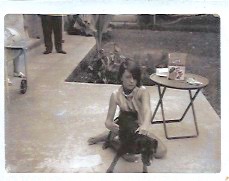
Me with Buffy

After my friend discovered our missing eighteen-year-old Cocker Spaniel dead in the creek, she gave me a new puppy for my birthday, part Lab, part Beagle.

‘Buffy,’ named after the girl in 60’s show, Family Affair, was still young–two, I believe. I let her come with me across the quiet residential street to play with neighborhood friends. She was so happy before she ran in front of a parked car. The driver didn’t see her. (To this day, I accuse him of speeding, especially when he was driving past a group of kids  playing in a front yard.)

Not disclosing the images still in my mind, my dad called me from the vet clinic. “Carolyn,” he said, his voice choking with tears. “Since she’s your dog, you have a decision to make. She can live with three legs or we can put her to sleep.”

Back then, I had never seen a dog with three legs. My young, limited brain had to make a choice. Guilty Carolyn said, “Every time I look at her, I’ll remember my mistake.” Compassion Carolyn said, “I don’t want her to suffer.”

“Put her to sleep,” I whispered into the phone, because I didn’t have the life experience to tell me otherwise.

Later in life,  when I had children, I sat in the living room in our new house, my five-year old daughter next to me on our sofa. As we watched my baby-grand piano being set up, she said, “Mommy, why does it only have three legs.”

Spontaneously, I said, “Because, sometimes, that’s all you need.”

Then, I thought of Buffy.

scan-7

Now, fifty years later, I’ve met many three-legged dogs.

In my latest novel, Distilling Lies, the plot line doesn’t require a dog. Even so, Emma June has one.

Page 283:

Beating ourselves up kept us from moving forward. When Choppers lost his leg, my guilt stungso much I could barely look at him. Then I realized his sadness hadnothing to do with losing a limb but from my lack of attention. He wanted me to love him regardless of how many legs he had.

And there is was, a theme relevant to my novel. The new outcome put a different kind of smile on my face. Buffy (Choppers) is happy with three legs.

One way or another, aren’t we all three-legged dogs doing the best we can?

Traveling Mercies (Anne Lamott),

Carolyn

Writing to heal-   http://www.apa.org/monitor/jun02/writing.aspx via @APA

How to Turn Traumatic Experiences Into Fuel For Your Writing  https://shar.es/1Efxfr via @sharethis
Where Do Inspirations Come From?

IMG_3407.JPG

If Give You Give A Mouse A Cookie, he’s going to ask for a glass of milk. When you give him the milk, he’s probably going to ask for a straw….”

That’s what happened to me, but in a dream.

So, I took that morsel, ran with it, and didn’t “return” until five years later.

Hmm? How to make this brief?

We own our family homestead.

homestead 004

My great-great grandparents set their belonging on the land in the 1840’s and said, “das ist gut.” And it was. And it is.

In my dream, the essence of me stared into an old photo. In the frame, the couple turned to one another and smiled. Then, the screen door opened. The farmer stood in the doorway to greet his wife, but couldn’t enter.

And that’s what started the process of writing The Last Bordello.

As written in Chapter Two:

Most nights, I see Papa in my dreams. In a slower-than-life pulse, in a not-so-common four-count measure, he smiles as he grabs the knob of our screen door and opens it to enter. His movement repeats. He smiles and opens the door. Smiles and opens the door. Each time, he never enters. He never falls.

But Papa did fall; collapsed before crossing our threshold into the house his neighbors helped him to build. Four years ago now, all of the notes of Papa’s life faded away with his last breath. A stillness so loud that my ears still burned.

If only Papa hadn’t died.

I’m not living in 1901 anymore. I’m no longer in a bordello, in a lunatic asylum, or attending  a Women’s Christian Temperance Union or Suffrage meeting.

I’m in 1928. So far, it’s the cat’s pajamas. (The Moonshine Thicket– working title)

screenshot-2016-08-02-08-36-31-copy

screenshot-2016-08-02-08-55-26

Dear writers, listen to your dreams!

The Time I met John Steinbeck

How, you ask, was this possible? Mr. Steinbeck’s nephew, a friend of mine, still oversees the place in Sag Harbor, New York and invited me, my husband and another couple to come for a few nights stay.

Knowing I was (and am) a writer,  my travel companions saw the spark in my eyes, felt the dizzing euphoria welling up inside me as we pulled up to the house built in the 1960’s.


img_3117


He was there, all around me.  

To my right, sat this bench.

img_3116

I patted the grand Oak and entered.


img_3062

At first, what made things “real”for me were the original photos lining the hallway like vintage wallpaper.

But here’s the best part. Next to the bay is a gazebo. It’s where Mr. Steinbeck wrote Travels with Charlie, his poodle and  best friend, who is buried steps away, his leash inside the gazebo.

img_3065

img_3157

AROYNT, roughly meaning, go away. Steinbeck hammered the nails into the cement in front of the gazebo.

img_3160

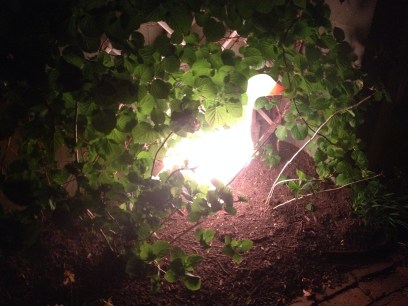
His wife understood his need for solitude. So, at happy  hour or suppertime, she would light up the plastic goose to let him know it was time to come in.


Mr. Steinbeck’s nephew never gives away the gazebo’s combination. But he gave it to me. And, I wrote. There. Where HE wrote…

img_3167

img_3064

img_3699


… and his timeless objects still remain inside.


img_3110

img_3111

Wow! Just wow!

At the risk of being offensive, I opened a box containing pencils. I asked Mr. Steinbeck’s nephew if I could have one (there were many). He said, “Well, that were my aunt’s. Let me give you one that I know Uncle John wrote with.”

WHAT?

In the gazebo, he opened an old box. Inside were pencils without erasers. “Uncle John never erased,” he said. “Each day, before he started writing, he made sure his pencils were sharpened. He wrote on a Big Chief tablet.”

He handed me the pencil. Do I need to explain how I felt?

img_9622

It was two years ago last May that I inhaled greatness. Why am I finally posting this? Perhaps because, when I wrote in John Steinbeck’s gazebo facing Sag Harbor Bay, I was working on The Last Bordello. Now, it’s published.

Thank you for the inspiration, Mr. Steinbeck. And for the pencil.

img_3077

IC Blog Tour: Navigating the Writing Path

A big thank you to Clifford Rush for the invitation to the IC Publishing Summer Blog Tour.  Clifford Rush is the pen name for a husband-wife writing team who share 15 years in laws enforcement and write fast-paced crime novels. Learn more about them at http://www.cliffordrush.com


How do I start?

With my first novel, No Hill for a Stepper, my father and his story inspired me.

My second novel? A single image from a dream of course. The small chunk grew into the idea for a story. Then all I had to do (the “all” stated with sarcasm) was to pull out the mortar and pestle and do a bit of grinding (including my teeth when my frustration spills on my keyboard)


How do I continue?

I have no choice but to keep going. My characters tug on my sleeves and pull my hair. They want to know what will happen to them as much as I do.

I almost always write outside where there are no walls to confine me – not a noisy coffee shop but a quiet place in my backyard where the sounds of nature are my only background music.

My new novel in progress, The Last Bordello, is set in a 1901 bordello so research is a must. I love time traveling backwards so scouring the Internet is no chore.

Research, ideas and characters jumbled together, I start sorting them out like panning for gold then only choose the best nuggets.

(this is NOT my backyard)

(this is NOT my backyard)

How do you finish your project?

I keep going. My characters’ lives depend on it.

The Challenge?

Mine is wondering if I have chosen the right structure, the best POV characters, if I have enough but not too much poetic narrative and description.

Tip: 

If you love writing, keep going. It is your passion, your yearning. It calls to you and pleads for your attention. Hug it close.

 https://twitter.com/nohillforastepR

www.cdwcreations.com

Passing the Pen

And now, I am so inspired and excited to introduce you to the following contributors who will be sharing their experiences, challenges, and tips, on navigating the writing path from start to finish. Check out their links, and watch for their blog posts on Wed, July 23rd.

Diane Andersen holds a BA in elementary education and has over twenty years classroom experience in all grade levels from pre-K through high school. She currently teaches private piano, voice and violin while pursuing her passion of writing historical fiction. Her first series based on a historic site near her home will soon be available for publication. She also has written articles for local newsletters and a few short stories including one published by Walrus Press. She lives in Illinois with her family, a cocker spaniel, a cat and a rabbit.

DianeAndersen@ladydi2u

http://dlandersen-writer.blogspot.com/


Louise Redmann is writing her second medieval romance novel about what a woman will do to protect her daughter from an evil man. She also loves to write short stories and vignettes, some of which may be found on her website:

http://www.louiseredmann.com

https://twitter.com/louiseredmann

https://www.facebook.com/louiseredmann

Now What? I’ll tell you…

For readers, one book closes while another one opens.  I suppose this is true for authors as well. However, No Hill for a Stepper is not only my first published book, it is my father’s story. Aside from the story itself, it is a reminder of the two years spent beside him taking notes and recording his comments on a cheap Sony recorder. It is a reminder of the trip we took back to his roots both in conversation as well as physically to Rotan, Ranger, Roby, Sweetwater and Temple, Texas. Although Dad did not live long enough to see the published version, my sister gifted me with a fabulous present. She looked at me and said, “This is a present from Dad and I.”

“Dad,” I asked. “Our Dad?”

“Yes.”

And there it was, my favorite photo of Dad sitting on the front porch at our homestead except this time, he was holding a copy of my book in his hand.

After the book was published, I began asking readers to send me pictures of themselves reading my father’s story.  Not only did the photos make me feel proud, it made me think of how much my father enjoyed sharing his story with others.


So what’s next? An author’s pen is always close at hand. Meta, one of the central characters in my new book, was the first to introduce herself to me. Other characters have either snuck up behind me and tapped me gently on the shoulder or  have introduced themselves quite spontaneously, yelling “here I am! Put ME in your new book.”  Each time I sit down to write, I am eager to learn what they will do or say next. I have little control over these characters.

It is 1910. There is a farm girl who lives in a German community outside of Fredericksburg. There is a prostitute in a bordello in San Antonio, a thirteen-year-old newspaper boy with a rolled cigarette in his mouth and a wise great aunt. There is the madam of the bordello with her trusty assistant who is laced with spice and grit, and a young man with a deep scar across his face. There are strangers and connections.  There is murder.  There is innocence and guilt. There are lies and deceit. There is only one truth.

THAT is what is next.

But No Hill for a Stepper?  It rests comfortably, open, in the center of my chest.

A book launched Texas style…

Aside

Since I have “friends” now, I’m reblogging this post from 2011. It was a special day for me, indeed.

No Hill for a Stepper book launch

Carolyn Dennis-Willingham


No Hill for a Stepper was  launched Texas style with  James “Slim” Hand as our  special musical guest.  Singing the songs of Cono’s era that would have made Bob Wills and Gene Autry proud, the music was the perfect foreground for our hill country setting. What an evening!  The word for the evening was “surreal” as I saw the efforts of the last 3 1/2 years come to the end of just a beginning. I cannot begin to thank all of the attendees who supported me although I certainly tried! Plus they donated sacks of coins that I will give to the winners of the students in Bell County for the “No Hill for a Stepper” essay contest.  Payin’ it forward as they say.

To the crowd of over seventy people, my heartfelt acknowledgment of my father was this:

“No Hill for a Stepper”  is my father’s story. While my mother, during her lifetime, was thirsty for life, she spoke mostly about her present and her future.  My father focused more on his past.  There were reasons he did so.  First, because he wanted my sister and I to know how very different his life was compared to ours. Pat and I didn’t have to pick lambsquarter for our meals and we didn’t have to live in a dugout for our shelter.  But the other reason he talked so much about his past, especially in his later years, was that he had something to resolve before he died.

As many of you know, my father was very much aware of this novel. A pen guided my hand in response to the things he recounted to me. Dad talked. I listened and wrote and wrote and and I recorded. Never in my life would I have been able to make up his story on my own.

Cono is here tonight, along with my mother.  They are here in the photos and in the songs that James Hand is playing. They are here in my spirit and in my heart. Together, Mom and Dad are where all questions are answered and all things are resolved. They are now where things are no longer discouraging but instead, they are where things are copacetic.  

My father did not live long enough to see the final product. So Dad, here it is – the final product I told you I would finish. “If I  tell you a rooster wears a pistol, look under its wing.”

And then, my fellow supporters joined me in singing Dad’s favorite song, “Home on the Range,” loud enough for him to hear.