It’s 1970 and I’m a big shot

I’m in ninth grade and about to participate in my first sit-in. Why not? The whole country is protesting something – women’s rights, the Vietnam War, President Nixon. I’m nervous, though. I don’t want to get kicked out of school.

The sit-in was planned yesterday when we were told that us girls could no longer wear short skirts. Instead, they had to be no more than an inch above the knee. How stupid is that?

Before school starts, about 50 of us sit on the front lawn. The bell rings to begin the day. We look at each other. We don’t get up. Man, are we feeling triumphant.

Until the principal shows up and says, “Get to class. Now!”

One by one, we stand and sulk our way through the school doors and to class.

I guess we need more practice at this protesting thing.

Image credit

784e45f740cee5329d1c4ef58b9cc71c.jpgbam-picketing-5.jpg

Renewal or Regret?

Cono, age eighteen, travels back home to confront his father.

screen-shot-2016-12-29-at-1-41-22-pm


Getting on the train, I’m thankful it’s not crowded. Too many people too close to me is something I’ll never get used to. I find a seat toward the back like I always do. A back up against the wall is a back protected. I need to see what’s going on around me at all times. And like always, when I hop on a train, I hope that my head is still attached when I get to where I’m going; not like our friend, Wort Reynolds who hopped on that train to Clyde Texas, the train that grabbed his head and kept right on going.

         “Ticket please.”

            I turn my eyes from the curved tracks outside my window to the ticket taker. Handing it over, I watch him punch the hole without even looking into my eyes. How many years has he done this, I wonder, and does he like the shoes he’s wearing?

         Home, a place that’s sometimes as hard as cement that you can’t pull your shoes out of. Nevertheless, that’s where I’m heading.

            My ears focus on the sound of the train’s idling, but eager-to-go engines. Where the hell would I be today if I didn’t have those railroad memories chugging along with me, some good and some anything but?

         Just as I’m feeling comfortable that I won’t be crowded, I feel something settling into that worn seat next to me, making itself comfortable but making me anything but. It nudges me. I ignore it and then tell it to go away. It doesn’t listen. The memories want me to pay them a little attention. I know this train is about to pull out. I know this train is taking me to Temple. But my mind and my uninvited seat companion start to take me somewhere else, somewhere I’ve already been before, somewhere I don’t care to go back to. It starts speeding me down the track a lot faster than this train is accustomed and a whole lot faster than I can put a stop to.

         The first memory is safe. It makes me wish, “If only it could have all been this easy.”    

         But past wishes were reserved for the other folks with good seats.    

         Not for me.


Renewal – Excerpt from No Hill for a Stepper

The Shape of Cono’s Being.

In a previous post titled, The Shape of our Being, I mentioned how experiences shape our humanness. Here’s another example of the “shape” of Carolyn’s Being that shows up in my novels.

Disclaimer: I’m betting on my ‘underdog-ness’ again–that part of me who feels uncomfortable with self-promotion. But try, we must. Right?

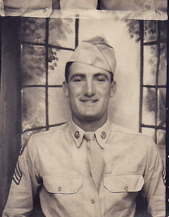
NOTE: No Hill for a Stepper, is about Cono, my father (and a huge piece of my heart) who died in 2009 before its publication. Don’t worry, he read and loved the first draft.

In 1942, victimized his entire life by his own father,  fourteen-year-old Cono must stand  up against him an protect his mother and little sister.

Excerpt:

I hear Mother scream. I snap back into the present, out of my daydream. Maybe she’s woken up, has seen blood on her sheets reflected in moonlight, seen the blood on Dad’s face. I start to get up, but the quiet has taken over; but only for a moment.

I hear a voice I know is Dad’s but different somehow, guttural like a wolf’s growl. I hear Mother say, “Stop it Wayne!”

My feet touch the floor before the rest of me knows what it’s doing. I open my door. Mother is backing towards me, but away from the bloodied-face man holding a butcher knife, glistening from moonlight, shiny like a raccoon’s mirror. He’s stumbling towards her. My mind freezes. It’s a scene from a scary picture show. No, Cono, I tell myself, this is real. Real life, real time.

Dad’s stopped walking. He’s swaying back and forth like an old porch swing. No, more like the swing of a hanged man’s noose. His eyes are glazed like a film of anger is laying on top that he can’t wipe away. He glances once over to the couch where Pooch is sleeping.

“Mother, keep backing up towards me,” I tell her.

She stares at my father but listens to my words. Dad stops at the kitchen table, he puts his empty palm on the table for balance, the butcher knife in the other hand swaying by his side.

“C’mon, Mother, keep coming to me,” I say softly, feeling a surge of calm and determination at the same time.

Mother has backed all the way up me. I pull her behind my door into the bedroom where Delma is still sleeping. Mother is shaking. My hands are doing the same now. I see our .22 sitting on the open shelf just a few feet away. It’s so close I can almost feel it. It’s like the .22 Hoover found, the one I felt in my hands, the cold steel of it. Now, I want to feel the warm safety of it.

A fear invades my body like a sickness. I’m drowning, but not in water. I’m drowning in the fear of what to do next, what I need to do to protect my family from a madman.

IMG_2897

Here’s Cono, my dad. My sister had the novel photoshopped into his hands and gave me this awesome framed photo.

Birthday Blues Music?

Before I turn that big corner, I’ll have to look both ways.

Twenty years ago, on the evening before my fortieth birthday, I wrote a little cathartic something for myself. Something about “anything goes,” how I might dye my hair purple, get boobs, a tattoo, spit when I want to. In these past twenty years, I did one of those things. And before you wonder too hard, I’m not a spitter. I’m not good at it and don’t have a hankering to learn now.

So, I’m at the corner. To my left is the past, my right, the future.

Obviously, unless I live to be 121 years old, there is much more to see on my left, sixty years worth.

I was very fortunate to have loving parents and a sister, five and a half years older. I often tell her it’s one of the many things I love about her. She’s been every age before me and can tell me what it’s like.

Am I being overly sensitive?

Yes. But sixty? It’s so hard to believe.

I know when that big day comes a few days from now  (not just my birthday but early voting day in Texas), I will settle peacefully into a new decade.

But what will I see? Do? How many more novels live inside of me that beg to be allowed in public?

How many empty canvases can I fill with paint and like the result?

When will I have to stop boxing? (pads and bags, not people)

Mostly, I wonder, what will I learn?

That’s the exciting part.

Sometimes, I want to return to the years when my children were young. The fun we had at parks, reading stories, making up stories, and endless other happy times. I loved watching them grow.

I smile now after typing that last sentence. They are adults and I still love watching them grow. And each of my two children have given me a grandchild. I will watch them grow too, just not for quite as long. It’s okay. Because now it’s my children and grandchildren’s turn to experience that joy.

And that thought makes me smile like the birth of a new baby.

It’s the circle of life. And it’s beautiful.  

th-21

‘Righting’ Disturbing Childhood Incidents in our Novels.

Simple, really. Life experiences affect the way you write. And, as authors, you have the power to change, modify and/or right the pains you may have endured when younger.

Sometimes, when writing, you don’t even expect a terrifying childhood event to pop into your consciousness. Especially if that incident has nothing to do with the story’s plot line. But memories pop in, don’t they? When that happens, your fingers peck down on the keys and type a different scenario, a different outcome.

I won’t go into the gory details. But I’d like to share a disturbing memory.

It’s my fault. That’s what I thought as a ten-year old.
scan-21-1

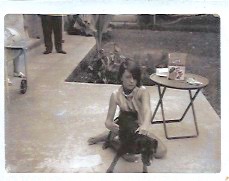
Me with Buffy

After my friend discovered our missing eighteen-year-old Cocker Spaniel dead in the creek, she gave me a new puppy for my birthday, part Lab, part Beagle.

‘Buffy,’ named after the girl in 60’s show, Family Affair, was still young–two, I believe. I let her come with me across the quiet residential street to play with neighborhood friends. She was so happy before she ran in front of a parked car. The driver didn’t see her. (To this day, I accuse him of speeding, especially when he was driving past a group of kids  playing in a front yard.)

Not disclosing the images still in my mind, my dad called me from the vet clinic. “Carolyn,” he said, his voice choking with tears. “Since she’s your dog, you have a decision to make. She can live with three legs or we can put her to sleep.”

Back then, I had never seen a dog with three legs. My young, limited brain had to make a choice. Guilty Carolyn said, “Every time I look at her, I’ll remember my mistake.” Compassion Carolyn said, “I don’t want her to suffer.”

“Put her to sleep,” I whispered into the phone, because I didn’t have the life experience to tell me otherwise.

Later in life,  when I had children, I sat in the living room in our new house, my five-year old daughter next to me on our sofa. As we watched my baby-grand piano being set up, she said, “Mommy, why does it only have three legs.”

Spontaneously, I said, “Because, sometimes, that’s all you need.”

Then, I thought of Buffy.

scan-7

Now, fifty years later, I’ve met many three-legged dogs.

In my latest novel, Distilling Lies, the plot line doesn’t require a dog. Even so, Emma June has one.

Page 283:

Beating ourselves up kept us from moving forward. When Choppers lost his leg, my guilt stungso much I could barely look at him. Then I realized his sadness hadnothing to do with losing a limb but from my lack of attention. He wanted me to love him regardless of how many legs he had.

And there is was, a theme relevant to my novel. The new outcome put a different kind of smile on my face. Buffy (Choppers) is happy with three legs.

One way or another, aren’t we all three-legged dogs doing the best we can?

Traveling Mercies (Anne Lamott),

Carolyn

Writing to heal-   http://www.apa.org/monitor/jun02/writing.aspx via @APA

How to Turn Traumatic Experiences Into Fuel For Your Writing  https://shar.es/1Efxfr via @sharethis