The guest of a Fruitcake

I had eaten my Swanson’s TV dinner on top of the TV tray and watched and listened to what I could on TV. Even Dr. Kildare, who usually makes me foolishly swoon, looked more like Barney Fife. I’m going bonkers. I know it.

But bedtime was bliss.

The “TSR”, the Temporary stay room,” as Olvie calls it, could be a lot worse than it is. Although the dresser and the headboard on the twin bed are stained puke green, the room itself is at the front of the house. I have one window that looks out to the street. The window on the side gives me a view of the neighbor’s trashcans lined up against their pink brick house.

I had discovered that the window locks are easy peezy. One twist and I could be home free. I know where our spare house key is hidden. How hard would it be to go home, at least for a few hours? Crank up my record player. Listen to Booker T. or the Isley Brothers on Mom and Dad’s new Magnavox player. Or, with the money Mom gave me for “emergencies,” I could go someplace else. Like, for days.


Current Work in Progress, a novel set in 1963 during segregation.

Trying to keep a straight spine

In the glow of the kitchen lantern, I spotted the lone tear in Reba’s eye. “So, what’s now?” she asked.

“It’s only Temporary, Rebie. She’ll be back before we know it. I just hope the plan works. We’ll find out in the morning.”

“Fannie, notice how this catawampus started when the Wild Bunch come here?”

“How do you see that?”

Reba folded her hand. “Etta leaving with Sundance. That’s when Sadie’s trigger got pulled. Pushed her over that ledge.”

I shook my head. “It was before that.”

She glanced up at the ceiling. “Yes’m, suppose so. Plopped out in a cabbage patch with nobody around to comfort her ’cept for devil mother.”

“Rebie, we’ve all had our sorrows. Some just can’t seem to recover from them.”

“You dids, though. Came outta that orphanage with a straight spine.”

“It didn’t feel so straight at the time.”

“Mmm. Never does.”

Excerpt from:

51rszIW1buL._AC_US218_.jpg

Inching toward the red doors


With one glance at the oversized house, I knew it wasn’t the right address. I flashed him a cold smile. “That remains to be seen.”

“Everybody knows it’s The Boarding House. Just what you asked for. Owner’s a nice lady, too.” He smirked. “Well, I’ll be off then.” He set the luggage down, shuffled his feet, and glared at me. When I stared back, he turned with a mischievous grin. Then, the loose soles of his shoes flapped as he cull-umped away.

I neared the front door and stopped to read the sign. Madam Fannie Porter’s Boarding House. The term “madam” did not escape me. Nor did the sparsely dressed and licentious female “boarders” I spotted through the slightly parted curtains.

I sat on the curb, too tired to cry.

A thick raindrop thumped my hat; the second thudded my skirt. A lightning bolt forced me to stand.

I glanced back at the grand house of ill fame, swallowed the Bitter taste of doubt, and inched toward the red doors.

Excerpt from:

51rszIW1buL._AC_US218_.jpg

“Gotta protect yerself at all times”

Screenshot 2017-04-25 09.49.21

I see Dad when he eyeballs the Tombstone, staring at him like he’s already pinned him in a corner. They dance around each other like feral cats waiting to pounce on a rat. Even though I can see Better now, I don’t get what they’re doing. They look like they’re play fighting.

“What’s happenin?” I ask Aunt Nolie, who’s followed me up closer to the ring.

“The Tombstone is throwin’ a few jabs.”

“What ’er jabs’?”

“Well, see, a jab ain’t usually a hard punch, but it lets the other fella know yer in the game. Jabs kinda make the other fella pay attention. They’re holdin’ their gloves up by their heads ’cause in boxin’, ye gotta protect yerself at all times.”

The Tombstone jabs, trying to get Dad’s attention. Dad’s smiling like he’s watching a funny picture show. Aunt Nolie tells me more. The Tombstone throws another jab, then a straight right, but Dad easily ducks under it and comes up with a left hook to the jaw.

“Well, lookie there, he’s done it,” says Aunt Nolie.

The Tombstone went down fast, laid out flat on his back, out like Lottie’s eye. The fight is over before the first bell had a chance to ding. Dad had been paying attention alright.

The Ranger folks, some who like Dad and some who don’t, hoot and holler that one of their own just beat a stranger, a foreigner on Ranger soil. My dad is a hero.

Dad doesn’t brag though. He smiles without his teeth showing while he stares down at the bloodied man. The referee counts to ten. The Tombstone twitches his eyeballs. Knowing he’s not dead, the referee raises Dad’s right hand up in the air and declares him the winner.

Walking home, I think about how good it was to see Dad do something good like that, something Better than drinking Pearl beer and ignoring me.

The next morning I ask, “Were ye scared Dad?”

“Naw, I ain’t afraid ’a nothing. Besides, that pissant couldn’t fight the gnats off his butt.” I laugh at the picture of the Tombstone trying to swat gnats off his hind-end while wearing bandages on both hands.

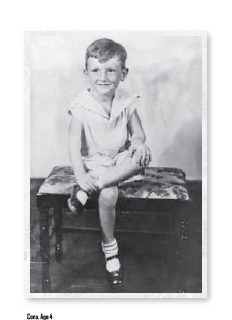
Excerpt from No Hill for a Stepper, my father’s story


The searching-for-a-penny-in-your-poop kind of Lifestyle

Screenshot 2017-04-27 09.17.30

Dad can catch a housefly in one hand without blinking, so it shouldn’t have surprised me none that his open palm slams fast across my face.

As I put my hand to my face he says, “Oh fer cryin’ out loud, Cono! I’ll swannin’, ye bit the your new toothbrush in two! Can’t ye do…”

I don’t hear the rest of what he’s saying. He’s walking away from me shaking his head back and forth. Half of my face stinging like it’s been resting on a yeller-jacket’s nest. The other half just feels sorry. How can you build up something so high, just to watch it fall down so hard? With the brush part still inside my mouth and its handle still in my hand, I think maybe I’m not so big after all. I guess I’ve found the baby Devil’s Claw after all. It’s me. I’m the baby.

I think about what I’m supposed to do with these two pieces. Maybe I can just swaller the brush part that’s not doing anything, but napping on my tongue. At least then, half of my dumbness will be covered up. Then again, Ma is always saying to me, “Cono, ye need to ‘member that anythin’ ye swaller is gonna have te come out the other end.” She reminds me about this all the time, ever since she saw me swaller a penny. No sir, she won’t let me forget about that penny. I’d picked it up off Ma’s night table, looked at it, sniffed it and after licking that penny, it just slid down my throat as easy as ice cream.

When Ma saw that penny go in my mouth and not come back out the same way, she said, “Times bein’ hard, ye gotta look at yer ba’ll movement ev’ry time ye do one. Don’t use the outhouse. Go in the fields. When ye find it, clean it off real good and hand it over to yer Mother. She needs it a whole lot more’n yer belly does.” I knew she was right. No one has much money. Most folks around here are six pennies shy of a nickel.

I watched each poop that turned up. I waited hoping it had melted and I’d already peed it out, but that didn’t happen. A few days later, when I saw that penny come out, I stared at it for a while. I just didn’t have it in me to pick it out of my poop and clean it off.

Every few days Ma would ask, “Find that penny yet, Cono?”

“No ma’m,” I’d say, “Must be makin’ its way back up.”

Now if I would have swallered that penny in front of Ike, he would have grinned and tilted his head to the side and said, “Well, aren’t you smart!” Then we both would have laughed and that would have been the end of it. Except, that ain’t the way it happened. It was Ma who saw me swaller that penny.

A few days later, Pa took me to Adam’s Grocers to get us some cheese and crackers like we always do on a Saturday. We sat on the breezy side of the house and watched the nighttime roll over to our part of town. It was so quiet, that when we opened our cheese and crackers, our crunching sounded like a two-man band. And when the music of summer bugs joined in? We were better than a revival choir.

“See this tooth right here?” Pa says jabbing his finger on a back tooth.

“Yeah?”

He puts that finger up to his nose, sniffs it and says, “It shor’ do stink!” Pa sure is funny sometimes.

Spitting out a cracker crumb with his tongue and a puff of air, Pa reached into his pocket, pulled something out and said, “Here ye go, Cono. I think this is yer’n.” I looked down and smiled at his open palm. There, sitting smack dab in the middle of his calloused farm hand was a shiny penny.

“Thanks Pa,” I said, staring at its purpose.

“Mm, hmm,” said Pa. “Ever’thin’s copacetic, ain’t it Cono?”

“It sure is Pa,” I said. Pa loves that word, “copacetic.” He told me “copacetic” means that things are tasting good on your tongue and that everything’s going to be alright.

I put the penny in my pocket to keep it safe while I ate my crackers. When we’d finished eating and as the sun was getting further and further away from the day, I ran into the house and saying real loud to my mother so Ma could hear, “Mother, I think this is yer’n.”

From my novel, No Hill for a Stepper, my father’s story. (available on Amazon)

Lifestyle

Snoopy of Dog Pile asks a question

Andy_Griffith_TV_Guide_1961.jpg

“TV Guide says Mayberry is calling to us,” Olvie says. “I don’t much care for Aunt Bee. She’s a prude. But I like it when she lectures Andy. Still, Andy and Barney are country bumpkins. But that Opie Taylor? He asks questions that make sense. And he teaches Andy more than he teaches his son. Chicken Coop, You could learn a lot from Opie Taylor.”

I could learn as much from Opie as I could from bumbling Barney Fife. Right now, I need real advice. I need my parents.

“When is Mom calling back?”

“Why? You can’t talk to me?” Olvie says. “You know me better than most now that you’ve seen my boobs. And I know you better, too. On the rag, you get bitchy.”

I picture telling Olvie about Tanner’s troubles, about the police showing up at her door any minute to ask for him. In my head, I hear her tell me to grab the bat under her bed and hit the deputy in the head if he tries to take away her employee.

Which reminds me. “Did you pay Tanner his wages?”

“Not that it’s any of your business, Snoopy of Dog Pile. But no, I forgot. Wonder why he didn’t ask. He asked for the job, didn’t he? Any person who asks for a job expects to get paid. If they don’t, they hold out their palm. And here I thought he was better than Elias Ford who fords not across the river when he could stand up right and stop acting like a slave.”

I hear Mom’s words. Now, more than ever, I know. Olvie might be a lot of things, but a racist isn’t one of them. Still, as Daddy once said, “When it comes to another human being, how can you truly judge them if you haven’t walked in their shoes? And not just for a mile, either. You’d have to walk in their shoes a whole lifetime. Otherwise, you’d never know where they’d been, what they’d seen, what’s important to them …”

When Daddy kept talking, I finally put up and hand and walked to my room. I don’t really know anything about Mr. Ford. Or Olvie for that matter. I suppose I’m only trying to know myself. At least that’s a start.

“Olvie,” I say a bit hesitantly. “Can I ask you a question?”

“A long or a short one?”

“Does it matter?” I say, sounding like her.

She glares at me.

“The question is short. It’s up to you how long your answer will be. That is, if you want to answer at all.”

“Gotta love having Control of a situation,” she smiles. “Well, go on then.”

“Have you ever been discriminated against?”

“Me? Discriminated against? More times than I can count.” Without saying more, she leaves for the bathroom saying, “Can’t watch a show on a full bladder. They gave me so much of that IV crap that I can’t stop peeing.”


Excerpt from “Olvie and Chicken Coop” (working title), set in 1963


Death of an Uncle

Screenshot 2017-04-27 09.17.30.png

The man lying in the bed doesn’t look anything like my Uncle Joe. His head is all swelled up, and a long, bloody cut runs from his forehead, over his eye, and down to his chin. There’s another cut over his nose, a deep gash across his forehead, and a couple more roost on his chin. Mother comes up behind me with a fresh washcloth and scares the tar outta me.

“What happened to him?”

“Punk Squares and Hammit Bashem beat ’em with knucks and a tar tool,” she says.

“What fer?”

“Don’t rightly know fer sure.”

“When’s he gonna get better?” I whisper.

“Ain’t sure he is, Cono.” I don’t really want to know why Punk and Hammit beat up my Uncle Joe. I’m afraid to.

Three days later, after plenty of moaning, my Uncle Joe dies. Earlier that morning, when he took his last breath, Aunt Nolie covered him with a Blanket and cried, “He didn’t deserve this.” She wipes her nose and eyes with the back of her hand. Except for his cuts and bruises, Uncle Joe was whiter than a bed sheet.

Now some men in a big black car come to take away my stiff-as-a-board uncle.

Excerpt from No Hill for a Stepper, my father’s story

Driving home from the hospital

Unknown-2.jpeg

We’ve only been waiting a few minutes when Tanner pulls the green and white Pontiac up to the front of the hospital. He hops out of the car, his teeth glistening in the dim light of dusk. Soon, I’ll be the one who makes his smile go away.

He opens the passenger door for Olvie. “Miss,” he says, ushering her inside like a real chauffer.

“How many dents and scratches did you put on Pontiac?” she says.

“Only one.” He smiles. “Buffed out easy as pie.”

Olvie lets out a hoomph. “Think you’re funny, don’t you Wise Guy?”

“Yes’m. Sometimes, my funny bone pops out an’ jes’ makes the white folk laugh.”

“Stop talking like Elias. Your uncle thinks he’s living on some plantation in Mississippi picking cotton for his Master.”

Tanner starts the car and pulls away from the hospital. “Uncle Elias’ Roots are still in his ancestors cotton field. And it’s Massa, not Master.”

I catch Tanner smiling at me through the rear view mirror.

“Don’t you dare stink up my car with slave dialect,” Olvie snarls.

“As long as you don’t dress me up in a moo-moo or as an Injun.”

“Don’t be crude, Wise Guy. I’ll have you know that Fritz is no ordinary Indian.”

“That’s for sure,” Tanner mutters.

Olvie huffs. “He’s an Indian Chief, and don’t you forget it.”


“How do you know Fritz likes being a Chief?,” he continues. “Maybe he just wants to be a mannequin.”

“Why you!” Olvie squeaks.

“Okay, maybe he liked being a Churman and wearing those lederhosen.”

“Shows what you know. The German Fritz got tired of thinking about the damn Nazis’.”

If I hadn’t watched the news, hearing their banter would have put me in a state of euphoria. Tanner seems totally happy, almost like a new person. But, knowing what I know, nothing in the world is funny.

Excerpt from my Work in Process, Olvie and Chicken Coop (working title), set in 1963 during segregation.

Is this racist?

Upon reading the daily prompt, Zip, the first thing that came to mind was the song, “Zip-a-dee-doo-dah … what a wonderful day.” It’s from Walt Disney’s movie, Song of the South. Released in 1946, this live-action animated musical takes place shortly after the end of the American Civil War and the abolition of slavery.

Some think the portrayal of Uncle Remus and the cartoon characters depict African Americans in a racist light — they use black vernacular and depict”the good times” of working on a plantation. Racist? I can see that. I can also see the love and kindness.

Johnny, the white boy living in the “main” house, befriends Uncle Remus who tells him stories of Br’er Rabbit, Br’er Fox and Br’er Bear.

Because of the controversy, protests by some African Americans at the release of the movie and more, Disney decided in the 1980’s not to release the movie on VHS or on DVD in the US.

But, Change.org has a petition out there to have the film released to the American public so we can “learn from history” and can make our own decisions.

Here’s what I know. The clips I watched of Uncle Remus are loving and kind. When Johnny is seriously injured, it is Uncle Remus he calls for on his “death” bed. Johnny reaches for his friend. I love this:

Screenshot 2017-04-24 10.16.07.png

At the end of the movie, Johnny and his two friends (one white, one black) are joined by Uncle Remus as they march happily up a hill.

Screenshot 2017-04-24 10.16.40.png

This ultra curious woman wants to know. What do you think of this movie? Is it racist?


Meta pretends she’s a prostitute

f0bd1b0118ebd124d619e79c44b32a50

His lips mashed together into a thin line. “Hey, wait just a confounded minute. Did you say…? They didn’t hire you to, you know…”

Retaliation. “Yes! I got a job there, and I know I will love it. The clients can be quite challenging. Last night, when I had to explain that I wasn’t warmed up yet—”

“I don’t want to hear more. Hell, I might be street-smart, but I haven’t even turned fifteen yet. Porca miseria!

“Porca what?”

“Just practicing on not saying ‘shit’ all the time. Ma doesn’t like it, and my little sister thumps me between the eyes when I say it. It’s a little Italian cuss word that means pig misery. Like saying ‘damn.’ Where you off to, anyhow?”

“My Aunt Amelia’s. Would you care to accompany me, Mr. Scallywag? I found a job because of you, did I not?”

He tore the cap off his head and rubbed his greasy black curls of hair. “Stop saying that. I had nothing to do with you getting that job!” He pointed his finger eastward and accelerated his pace.

“Oh, but you did,” I said, hurrying to catch up. “If it hadn’t been for you, I wouldn’t be tingling with avidity for this evening to arrive. That’s why I’m going to visit Aunt Amelia, to tell her the good news.”

“What’s avidity mean? Wait, you’re going to tell your great-aunt about your new job? At Fannie Porter’s?”

“Of course. She’ll be thrilled for me. Besides, she knows I’m good at it. I’ve been doing it for years now.” I muzzled the smile aching to form.

His eyes widened into a dumbfounded glare.

“And avidity means eager, like being Avid about something.”

“I gotta go,” he said, turning away.

One more chance at deception. “Giovanni? You said you were fourteen?”

“Yeah. Why?”

“Well, you are too young to be entertained at Miss Fannie’s. However, I’ll ask her if you can watch me perform sometime.”

His jaw dropped, his dander standing taller than his five-foot-five stature. “You want me to…watch?”

“Ah, we’re here. Thanks for the company.” I trotted off with the last laugh.

From The Last Bordello, historical fiction set in 1901