Get out your spray cans!

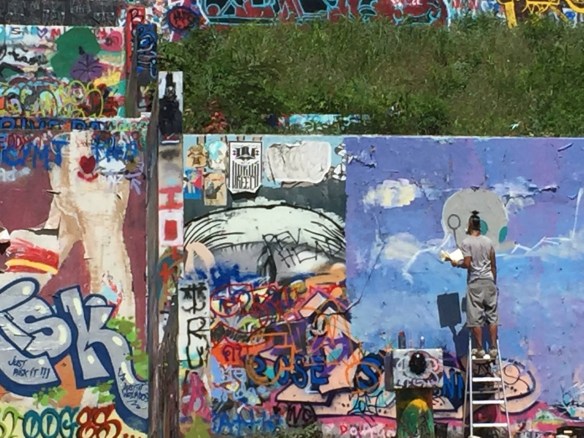
Yesterday, I finally went to Graffiti Park. Castle Hill (the Castle itself once was once a Military Institute) was supposed to be a building development. It failed but the concrete walls remained. So, guess what sneaky graffiti artists did? They painted. And painted. Now, with permission, you can create your own graffiti art. This means that every time you go, you’ll find it different. Cool, huh?

IMG_1047.jpeg

IMG_1049.jpeg

IMG_1050.jpeg


Death of an Uncle

Screenshot 2017-04-27 09.17.30.png

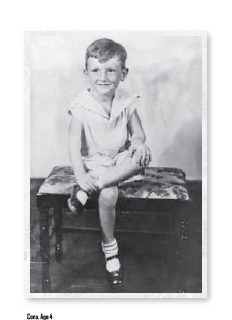
The man lying in the bed doesn’t look anything like my Uncle Joe. His head is all swelled up, and a long, bloody cut runs from his forehead, over his eye, and down to his chin. There’s another cut over his nose, a deep gash across his forehead, and a couple more roost on his chin. Mother comes up behind me with a fresh washcloth and scares the tar outta me.

“What happened to him?”

“Punk Squares and Hammit Bashem beat ’em with knucks and a tar tool,” she says.

“What fer?”

“Don’t rightly know fer sure.”

“When’s he gonna get better?” I whisper.

“Ain’t sure he is, Cono.” I don’t really want to know why Punk and Hammit beat up my Uncle Joe. I’m afraid to.

Three days later, after plenty of moaning, my Uncle Joe dies. Earlier that morning, when he took his last breath, Aunt Nolie covered him with a Blanket and cried, “He didn’t deserve this.” She wipes her nose and eyes with the back of her hand. Except for his cuts and bruises, Uncle Joe was whiter than a bed sheet.

Now some men in a big black car come to take away my stiff-as-a-board uncle.

Excerpt from No Hill for a Stepper, my father’s story

Campout over

screenshot-2016-08-02-08-55-26

It was dark, like now. Miss Helen had laid out the sleeping bags. Mama had set the sandwiches and cookies she’d made in the center of a picnic cloth.

After Mama and Miss Helen had gone inside the house, Scoot and me were fine for a while. We settled in to the hum and thump of the distillery until I realized the machine was so loud, I wouldn’t be able to hear danger if it came sneaking up on us. Maybe if Choppers had been there. But he was still recovering and getting used to his missing leg.

All that day, Scoot had been excited about camping out. That’s why I didn’t tell him I was spooked. I looked up through the gaps in the trees and watched the clouds as they moved across the half moon like Blankets trying to cover a small bed. Then it got darker. The owl hooted. When we both saw its eyes, yellow and mean, Scooter said it first. “Campout over.” Then he got up and walked inside with the sleeping bag over his head.

I’m not afraid of the dark anymore. I’m not afraid of untold secrets, either. “I’m afraid for Scooter,” I tell Frank.

Excerpt from The Moonshine Thicket set in 1928


The Ultimate Sign of Compassion

As many of you know, I consider myself more “spiritual” than religious. I have not attended a church, for various reasons, in many years. I did grow up in a Lutheran church – baptized, confirmed and married in the same one. I also know that every religion teaches us something.

In the Bible, Jesus’ washing of his disciples feet is a wonderful metaphor of how we need to treat others. No matter how powerful, important, confident (or lack thereof) we might think we are, humbling ourselves and serving others can only be a good thing.


IMG_2365.jpg

painting by me, CD-W

Driving home from the hospital

Unknown-2.jpeg

We’ve only been waiting a few minutes when Tanner pulls the green and white Pontiac up to the front of the hospital. He hops out of the car, his teeth glistening in the dim light of dusk. Soon, I’ll be the one who makes his smile go away.

He opens the passenger door for Olvie. “Miss,” he says, ushering her inside like a real chauffer.

“How many dents and scratches did you put on Pontiac?” she says.

“Only one.” He smiles. “Buffed out easy as pie.”

Olvie lets out a hoomph. “Think you’re funny, don’t you Wise Guy?”

“Yes’m. Sometimes, my funny bone pops out an’ jes’ makes the white folk laugh.”

“Stop talking like Elias. Your uncle thinks he’s living on some plantation in Mississippi picking cotton for his Master.”

Tanner starts the car and pulls away from the hospital. “Uncle Elias’ Roots are still in his ancestors cotton field. And it’s Massa, not Master.”

I catch Tanner smiling at me through the rear view mirror.

“Don’t you dare stink up my car with slave dialect,” Olvie snarls.

“As long as you don’t dress me up in a moo-moo or as an Injun.”

“Don’t be crude, Wise Guy. I’ll have you know that Fritz is no ordinary Indian.”

“That’s for sure,” Tanner mutters.

Olvie huffs. “He’s an Indian Chief, and don’t you forget it.”


“How do you know Fritz likes being a Chief?,” he continues. “Maybe he just wants to be a mannequin.”

“Why you!” Olvie squeaks.

“Okay, maybe he liked being a Churman and wearing those lederhosen.”

“Shows what you know. The German Fritz got tired of thinking about the damn Nazis’.”

If I hadn’t watched the news, hearing their banter would have put me in a state of euphoria. Tanner seems totally happy, almost like a new person. But, knowing what I know, nothing in the world is funny.

Excerpt from my Work in Process, Olvie and Chicken Coop (working title), set in 1963 during segregation.