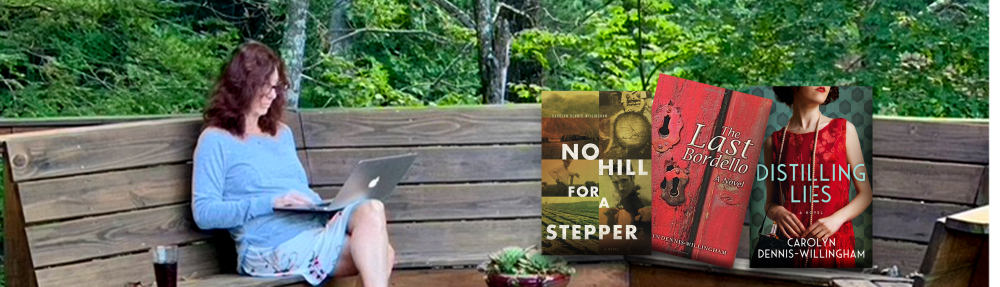

A Podcast?

I’ve never been interviewed for a podcast. (If you’ve had any experience with podcasting, any insights would be much appreciated!) This will be new to me. So, of course, I have to study up, do my research.

When first asked, I said, “What? A video?” I assumed it would be more like being on the radio. “So I have to wear makeup and sh..t?”

Laughter. “No. Of course you don’t have to wear makeup.”

Yeah, right.

Then I thought of my work space and where I zoom. I don’t mind friends seeing my overly cluttered background of miscellaneous pastel works, curled photos taped to a shelf, an amazon box of whatnots. I didn’t even mind the publishing staff having to stare behind me at the mess. But a podcast? I’d have to organize and reorganize and worse, stress about it.

“We can just do audio if you want to,” he said.

Settled.

Except for writing, I’m a planner for things of this sort. I don’t want to be caught off guard and asked a question where I’d have to hem-an-haw long enough for the listeners to lose interest (And I wouldn’t blame them. Silence is not always golden)

Here’s an article I found. You can read it all here.

Gather essential information ahead of time.
If you haven’t already created a system to track podcast interview details, now’s the time to do it. It doesn’t have to be elaborate—a simple spreadsheet works well. Start with the name and URL of the podcast, the host’s name and contact info, the date and time of your interview (don’t forget time zone!), the topic you’ll be discussing, and any other details you want to keep track of. 

Now’s also a good time to create a basic reference sheet to keep handy during the actual interview. I recommend jotting down: 

A brief, first-person bio you can refer to if you’re invited to introduce yourself at the start of the episode.
A short list of talking points to help keep yourself on track. Note that this doesn’t mean scripting out every word you plan to say. Much of the beauty of podcasts interviews is their spontaneity and the natural flow of the conversation between the host and the guest. But, you can jot down a few of your main points that you want to be sure not to forget. If the host provides you with questions in advance, you can include those here too. 
A specific place to send the audience after the episode. 

Okay, so this gave me ideas for some questions I could easily answer:

Which of the characters do you relate to most and why?

What drives each character?

What inspsired the idea for you book?

How much research did you need to do for your book? (historical fiction, so duh)

Which characters do you relate to the most and why?

How do you use social media as an author? (I’m not really good at this!)

Which comes first to you – plot or characters- and why?

When did you start writing?

What to you are the most important elements of good writing?

And of course, “In a nutshell, what is your book about?”

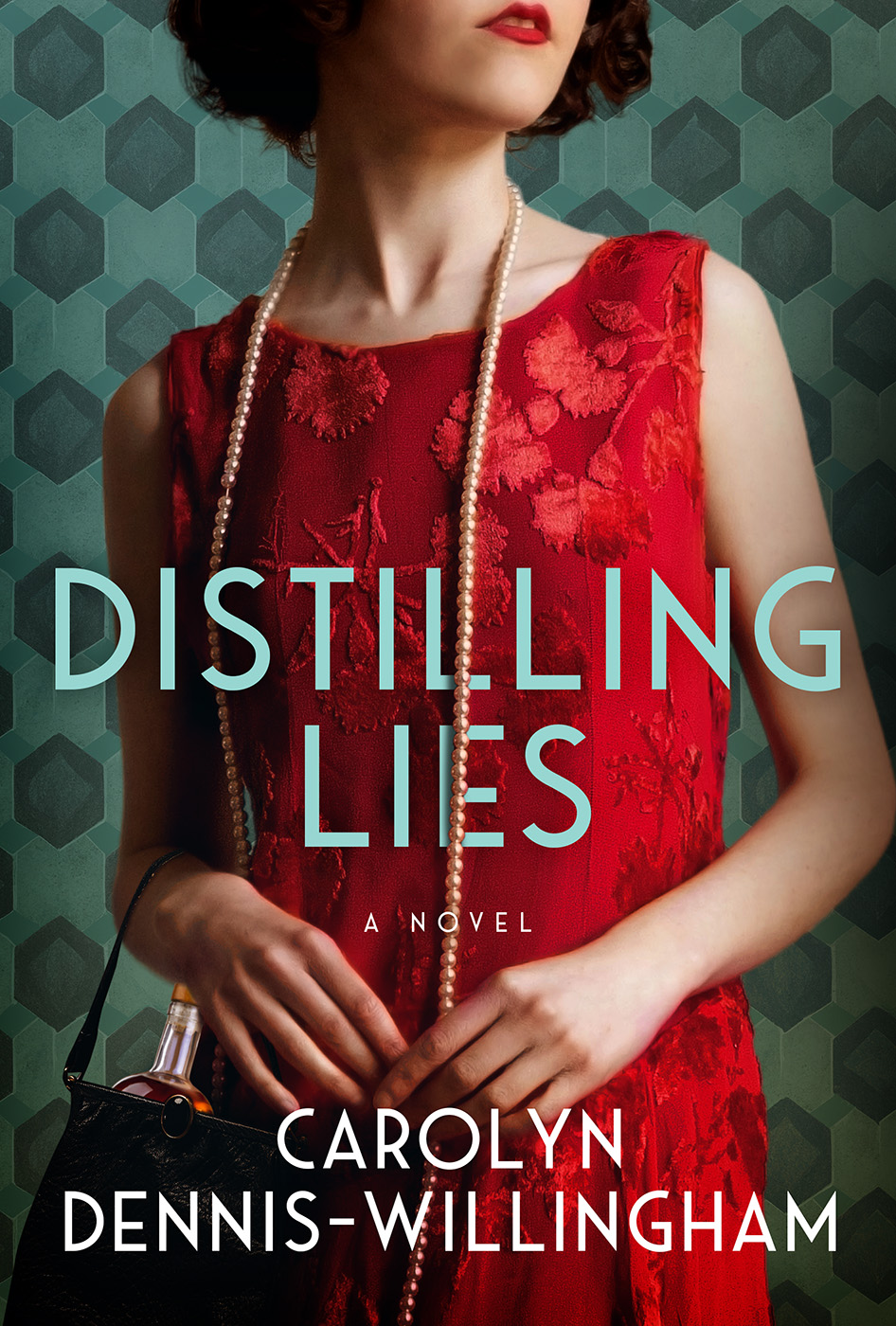
This question I’ll answer now: Set during the prohibition era, Distilling Lies is about  a 17 year old girl who must delve through the lies and betrayal of family, friends and small town corruption in order to find her missing mother.

I won’t answer those other questions here. At least, not yet. But if they are not asked on Podcast Day, I might have to come back and do what I do best – type out my answers.

Carolyn Dennis-Willingham is the author of Distilling Lies, now available on Amazon.
Quick Tip – Don’t ‘BEE’ an “on the Nose” Writer

I’ve been writing a very long time so when my learning curve takes a leap, I have to share it.

Writing too “on the nose” (a term recently introduced to me by my editor) is a sure-fire way to spoil the readers’ experience. They will be robbed of the very thing they are craving – subtext and subtleties inside the story. Readers want to make their own interpretations and we have to remember they are smart enough, intuitive enough, to do just that. Readers want the reading experience to be alive. And, they want it in technicolor.

Here is an example of where my editor caught me.

My writing: I don’t care about money. I just want to feel safe, loved. I want my friends to like me. I want to ferret out the truth so my family returns to normal. 

Editor: Sounds too simple and on-the-nose. You want to imply/show these things rather than say them outright.

What she forgot, or was too kind not to mention, my POV character would never have said “I want to ferret out the truth.” That was me, the author, talking.

On-the-nose writing is unnatural, and unexciting. And if the reader recognizes the words as author’s instead of the character’s, the novel becomes merely a piece of reading material.

Here’s an example of a too-on-the-nose internal dialogue::

I’m lucky Sears and Roebuck delivered my silk stockings on time. Bare legs wouldn’t be nearly as impressive, besides I want to be in style. As I pull them on, I think about tonight. I’ll find a quiet place where Samuel and I can be alone. Will I let him kiss me?

Now for the more colorful version from my Work in Progress. Notice the subtext:

I slide the stockings up to my thighs, roll the tops, and give a word of thanks to the Sears and Roebuck Gods for the delivery. The screen in my head flickers with thoughts of tonight’s picture show, me as the lead actress — Samuel sitting next to me on a well-chosen bench; the carnival lights catching the silk shine on my legs when I ease my dress up to my knee.

Think subtext – I like to think of them as hidden messages.

How boring it would have been if Dorothy Boyd (Renee Zellweger) had told Jerry Maguire (Tom Cruise) “Yes, I love you. I’ll take you back.” But she didn’t. She said that famous line, “You had me at Hello.”

Think natural, yet colorful dialogue (unless they are sitting on a therapist’s couch, people rarely say exactly what’s on their minds).

Think of better visual clues: “She pulled the sweat-soaked shirt away from her skin and looked up. Nothing but sun. Even the birds were too hot to fly.

Think of a colorful world where information is not allowed to be dumped into the readers laps.

If it sounds a bit like “show vs. tell,” it is. But WITH the added bonus of rich dialogue, subtext and subtleties.

As my editor told me with metaphor – Let the readers enjoy the roller coaster ride on their own. If there is someone behind them (the author) telling them where the drops or loops come up, the thrill is gone.

HERE is a great article that gives excellent examples of how the screenwriter of This is Us avoided “on the nose” by using subtlety and subtext.

HAPPY WRITING!

Look for me on instagram for additional wrapped goodies (including a trash bag for the posts you don’t like) 😜

image credit

Written in Nature

Ripe, the words,

in skies and seas

in sunset’s linger

in summer’s breeze.

Plump, the words,

in rain-filled clouds

or mist-less air

the view surrounds.

the thoughts arouse.

Spiced, the words,

in rushing streams

in forests deep

with endless dreams.

Find them, hold them, smell them, taste!

Interweave what nature’s graced.

**

(The handwriting in the above photoshopped image belongs to John Steinbeck, author)

Facetiming a very old friend

#RoaringTwenties #Writing

What was it like in the 20s one-hundred years ago?

Was life more simple then

when it was finally acceptable to apply makeup in public,

to strap a flask of moonshine beneath your dress

and take a sip before voting for the first time?

Did you leave your kitchen (and your new electric icebox) behind,

climb into your new Model T

and rumble off to work outside your home for the first time?

Tell me. How was that new-found freedom?

Did it Roar with jazzy attitude

as you shimmied and twirled

and Charleston-ed your feet toward new opportunities?

I hope so.

You paved the way for me.

DO YOU LIKE YOUR NOVEL’S CHARACTERS?

You’ve got a flow going. The inciting incident is spot on and the pacing is running at a good clip. But that one character?

There is something you like about her otherwise you would have thrown her out a long time ago. But as you read through your manuscript with an objective eye, you notice she might as well be a fly on the wall without eyes. She’s already got a motivation towards her purpose but something’s missing.

Here are a few ideas:

  • What is she afraid of?
  • What flaws does she have?
  • Shape her background/history so we better understand what made her “tick” to life in the first place.
  • Show her personality through her actions and creative dialogue.
  • Give her some interests other than star gazing.
  • What are the quirky qualities that make her memorable?
  • Is she a relatable character that holds common ground with the human reader?
  • How does she handle struggle and crisis? (Shrugs don’t count)
  • Make your reader fight for your character’s right to be in the book! (Or, make your character fight to remain)

Keep your characters alive!

Here’s a link for more on the topic.