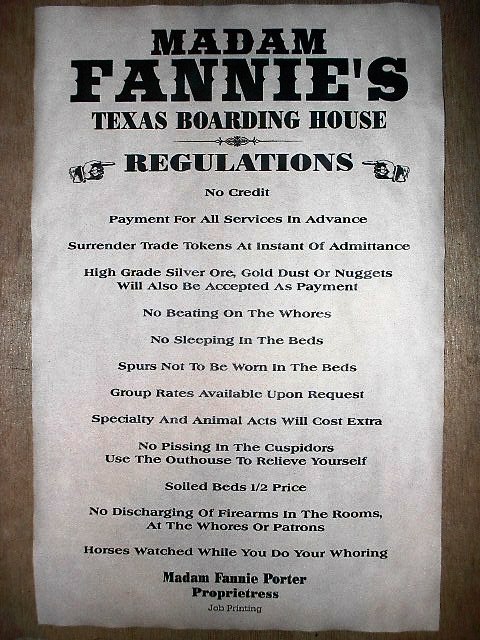
From The Last Bordello
My eyes burn. I can’t see. The concrete is hot beneath my back. They keep chanting, “Babies keep on dying. Nobody seems to care.”
Did I hit my head? Why is nobody helping me?
“Nixon is a murderer,” they yell. “Bring our brothers home now!”
A piece of clarity returns. It took a long time to get to Miami. Nixon is giving his second acceptance speech at the Republican National Convention.
I need Sam’s strong arms, the ones who promised to keep me safe if I agreed to come. Some Vietnam vet he is.
“Hold on, Frank,” a voice says.
“No, man. We gotta go. We’ll be arrested like the others.”
“I said hold on, dammit. I think I know this girl.”
I feel a hand on my forehead. “Chicken Coop? Is that you?”
Images float in my head—a mint green Pontiac. Crows pecking out eyes in an Alfred Hitchcock movie. Body parts in an unplugged freezer that make me want to laugh. I can’t. I’m too dizzy.
“Chicken Coop?”
It’s no longer 1972. It’s 1963 and I’m nine years younger. Now, it’s not the pig’s smoky gas that makes my tears.
(The beginning of my work in progress about race relations in 1963)

Reba stood over the cookstove and wiped a forearm across her brow. “Least the weather’s turning warmer. Time to start planting. Think it might freeze again?”
“How the hell would I know that?”
Reba shifted her stance and glared at me. “Lawd, I just asked a question. Ain’t no need to hatchet my words right when they come out.”
Hatchet. An ironic word choice. From what I’d gathered, the hatcheting Carry Nation currently sat in jail. “And when are you going to stop saying ‘ain’t’?”
Reba slapped a hot pad on the counter. “When I’s too old to fart, is when. Needs some Pape’s Diapepsin?”
“Sorry, Rebie. Things aren’t settling well right now.”
“You knows what your problem is, Fannie Porter? You worries enough to make your insides go kablooey. Now hang them worries on the hat hook and hand me that mason jar.”
“You think I shouldn’t worry? Sadie’s not herself, John knows about the Wild Bunch, the temperance women are coming, and if word gets out that Etta left with Sundance—”
“Who’s gonna tell?”
Good point. Would any of them cave in, spill our beans of Fortune?
Excerpt from The Last Bordello
Something moved on my left. “Look, Giovanni!” I pointed to the anole sitting on the rim of the Miss Reba’s flowerpot.
“You act like you’ve never seen a lizard before.”
“It’s not just a lizard. It’s an anole. Look, there!” A pink bubble grew from its throat. “The first time I saw one do that, I thought it was about to burst from the inside out. It scared me. It reminds me of Emil.”
“He looks like a lizard, does he?”
“No.” I gave him a gentle backhanded slap on the shoulder. “I was with Emil the first time I saw an anole do that. They camouflage themselves so they won’t be seen. They bob their heads and bubble their throats to show off. They also do it to protect their Territory and scare off intruders. I admire that. He stands his ground.”
Giovanni shrugged. “That’s what men do.”
“Like Miss Fannie does. And what more women need to do.”
“Guess that means you’ll be wanting to vote?”
“Let’s see.” I mocked a faraway gaze, tapped my chin, and turned to him. “Bet meine Arsch I do.”
“So what was in that concoction Miss Reba made for Mr. Davis?” I asked.
“She said it was honey, pepper, licorice, ginger, a couple of other ingredients I don’t remember. She made me hang an onion over his bed, too.”
The thought made me laugh. “And he allowed that?”
“Well, let’s just say it took a bit of doing. He told me he wadn’t scared of no goddamn vampire. I guess he was thinking about garlic.”
The scream pierced the evening like shattered glass.
We didn’t speak. We ran.
Sadie fell, but I couldn’t stop. Couldn’t wait. I recognized the voice behind the scream.
Excerpt from The Last Bordello
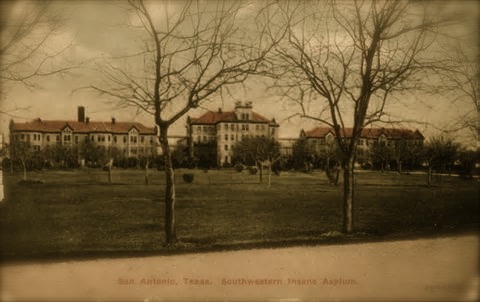
Earlier, I had been sitting at the piano, thinking of my deceitful yet productive visit with Mr. O’Connell, when Sadie shared her story in the kitchen. Horrifying as it was, curiosity forced me to stay. I heard every word. When she finished and said good-bye to Sheriff Tobin, I crept upstairs to our shared room. I opened my novel but the words blurred without meaning. (Meaningless)
I awoke to find the room I shared with her different, salty and sticky. No wonder Miss Fannie worked so hard to keep Sadie out of jail. It wasn’t just about her guilt or innocence but about Sadie’s demise if she were locked up again, secluded from the rest of the world. I wondered if the man who had raped her knew where she now lived.
I tried to imagine a girl of only fifteen placed in an asylum with no one to defend her, comfort her, or give her hope. Yes, she had been too young to have sex with Timothy, but that didn’t make her crazy enough to be thrown into a madhouse.
Excerpt from The Last Bordello

“Come out to the family room. Gladys wants a word,”Olvie yells from the front room.
Now I’m creeped out that a mannequin wants to speak to me. What will I say? Oh for Christ’s sake!
I take my time opening the bedroom door and peek out before exiting. Olvie’s hovering over the plastic body so if Gladys is saying something, I can’t tell. Yep, I’m going nutso.
“Good. There you are.” Olvie says turns toward me and stands erect. “What do you think?”
“Why, oh, did you take her shopping?” I say, trying not to think about myself in a straight jacket.
“No, silly-billy. Gladys doesn’t like to go out. I had it mail-ordered from Sears and Roebuck.
Gladys is no longer flapping in the 1920’s. Her fringed dress and headband are gone. She’s caught up with our decade and, although too big for the thin mannequin, I can’t help being impressed. The moo-moo is light green with white daisies attached to darker green vines that run diagonally down the dress. Orange stitching accents in between.
“Well, what do you think?” Olvie, or maybe Gladys says.
“It’s perfect. She looks like a new person.”
Olvie smiles. “She wanted a change so she got one.”
“Everyone wants a change, don’t they, Olvie?”
“Not everyone,” she says, and stares out the front window.
I’m so excited about the change in Gladys, I remind myself I need a real friend. Someone who’s not crazy or made of plastic.
I make myself a bowl of Trix cereal and try to remember I’m not a kid like the floppy-eared rabbit tell us on TV.
No matter your walk in life, we have all been affected by racial diversity. Some find it threatening. Others find is socially and culturally mesmerizing and exhilarating. For the purpose I am pursuing, let’s narrow it down to the white and African American culture.
While starting my new novel, my fear is the voice inside my head. It says,”How can you, a white woman, write about the African American experience in 1963? How could you possibly understand?”
Here’s my goal. To write an entertaining novel for all age groups but especially for young adults who may not know important historical facts about the Civil Rights Movement- which I will weave into the novel. I want the reader to take pause, reflect, and think about their actions going forward.
Big goal, huh? But I sincerely believe that understanding the past will put us in a better position for the future.
Here’s the premise to the novel:
In 1963, while staying with the unhinged friend of her deceased grandmother, a 14 yr old white girl from Texas meets a teenaged “Negro” boy from Alabama and learns first hand about racial injustice.
I am doing tons and tons of research. I have read “Black Like Me” by John Howard Griffin and The Fire Next Time by James Baldwin.
So here’s how you can, hopefully, help me.
I appreciate any and all suggestions!
Thank you for reading and responding!
Carolyn
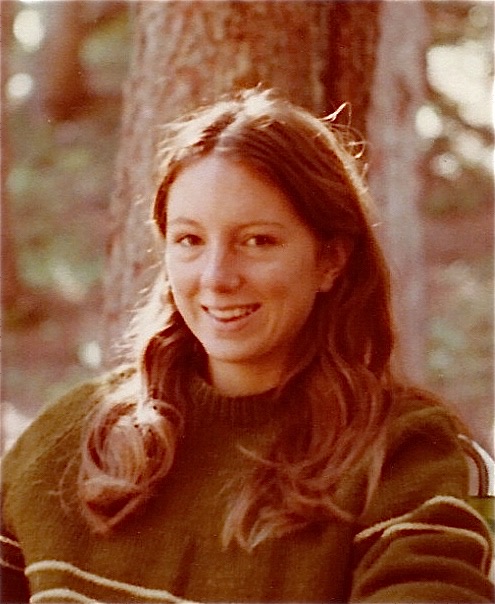
You probably know by now how much I love research. When I came across this photo of me on a camping trip in Colorado, I took a look back.
Notable things for me that year:
-President Carter grants pardon to American Draft dodgers of the Vietnam War
-Popular songs were the Eagles Hotel California and New Kid in Town, and The Bee Gees, How Deep is Your Love
-The first “Rocky” movie came out as did “Close Encounters of the Third Kind”
-The National Women’s Conference, held in Houston, was the first meeting of its type in the U.S. since the Women’s Rights Convention in New York in 1848.
But the best? The Medal of Freedom was awarded posthumously to Rev. Martin Luther King Jr. (to Coretta Scott King an MLK, Sr.)

Cono Dennis, his sister Delma & Pooch – late 1930s
For a week, the whole house feels pain of one kind or another. Delma’s in one bed crying, Dad’s moaning and cussing in his. But the only sickness Mother and I feel is a mean rumbling in our bellies from lack of food. Since Dad’s been bedridden, we don’t have any gambling money to spend on groceries.
Mother walks over to the kitchen cabinets and looks inside. No salt, no pepper, not even a lousy piece of stale bread is sitting in there. No sir, there isn’t a dang thing to eat. She goes to the last cabinet. There, all by itself, sits a medium-sized onion. She takes it out, holds it in both her hands and stares at it like she’s thinking a roast was fixing to pop out of it. At least that’s what I’m thinking, when my mouth gets all watery.
She peels that onion real slow, like it’s a prized Hereford being slaughtered for steak. She slices it up just as slowly as she’d peeled it. She puts it in a skillet and adds a little water, looks at it and adds more water.
The onion soup doesn’t taste like onion or even warm water. It tastes like cold hunger seasoned with poverty and sprinkled with fear. And the stuff that settled on the bottom of the cup? That’s anger. I drink it anyway. I feel like a Devil’s Claw, stacked up and falling back down on my own self. It’s like being slapped without even having a hand laid on me. Maybe it’s because the slap I feel is on the inside instead of the outside, a slap like a burning face just as uninvited.
Excerpt from No Hill for a Stepper, a story about my father.


 Carolyn Dennis-Willingham