Remembering Who You Are

I had a birthday. A big one. I wasn’t ready and felt a bit down. Then, my sister called. Our dad often told us “always remember who you are.” So, when Pat read me what she wrote, I knew it was the best, most sentimental gift of a lifetime.

Here is an excerpt of what my sister, Pat Witherspoon, read to me on on birthday.

Our Baby

            I don’t remember seeing her until we brought her home. I sat in the middle of the back seat, by myself. Then they put her in my arms. I didn’t move. She was asleep. She was the most beautiful baby I had ever seen. Of course, I hadn’t seen too many babies in 5 and ½ years, but she was still the most beautiful baby I had ever seen. Many years later I gave our mother a little plate, a picture of a little girl looking down, smiling, at a baby. That plate reminded me of the first time I saw our baby.

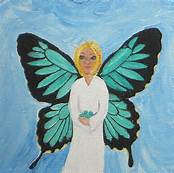
            Our baby has always been a butterfly. She crawled; then she walked, then she flew. We never knew where, or when, or if, she would land, or what she would do when she landed.

            We watched her run, which she could do really fast. We watched her play with her doll babies. We watched her play in sand and in the mud. We watched her swim, which she loved to do. We watched her ride horses, and bake cookies, and play with clay. We watched her paint with her fingers.

            We watched her sneak out of her bedroom window. I never understood why she didn’t sneak out the front door. That seemed easier to me. But butterflies must need to escape out of windows. We watched her dance, and play the piano, and fly.

            We watched her play the guitar, and write music, and dance, and sing. We watched her write poetry and prose, with no capital letters. I always use capital letters in the right places. I discovered that butterflies don’t need to use capital letters.

            We watched her fall in love, and out of love, and in love. We watched her get married. We watched her become a wonderful mother…and a loving grandmother. And all the time, we watched her fly…and paint, and write, and play the piano, and tap dance, and box, and paint and write books. (Now she uses capital letters in the right places, but probably wouldn’t if she had the choice.) She writes books about things that are hard to write about…like Dad. And I know that made him happy, like she did many, many times. We watched her speak Italian, and travel to places away from our house, just like butterflies do.

            She is still our butterfly, and our baby. She still flies, and we don’t always know when or where she will land. JRR Tolkien once wrote: “Not all who wander are lost.” Our baby has always wandered. But she has never been lost.

Now, I remember who I am and my wings are still intact.
th-25

artwork by DJ Bates
Birthday Blues Music?

Before I turn that big corner, I’ll have to look both ways.

Twenty years ago, on the evening before my fortieth birthday, I wrote a little cathartic something for myself. Something about “anything goes,” how I might dye my hair purple, get boobs, a tattoo, spit when I want to. In these past twenty years, I did one of those things. And before you wonder too hard, I’m not a spitter. I’m not good at it and don’t have a hankering to learn now.

So, I’m at the corner. To my left is the past, my right, the future.

Obviously, unless I live to be 121 years old, there is much more to see on my left, sixty years worth.

I was very fortunate to have loving parents and a sister, five and a half years older. I often tell her it’s one of the many things I love about her. She’s been every age before me and can tell me what it’s like.

Am I being overly sensitive?

Yes. But sixty? It’s so hard to believe.

I know when that big day comes a few days from now  (not just my birthday but early voting day in Texas), I will settle peacefully into a new decade.

But what will I see? Do? How many more novels live inside of me that beg to be allowed in public?

How many empty canvases can I fill with paint and like the result?

When will I have to stop boxing? (pads and bags, not people)

Mostly, I wonder, what will I learn?

That’s the exciting part.

Sometimes, I want to return to the years when my children were young. The fun we had at parks, reading stories, making up stories, and endless other happy times. I loved watching them grow.

I smile now after typing that last sentence. They are adults and I still love watching them grow. And each of my two children have given me a grandchild. I will watch them grow too, just not for quite as long. It’s okay. Because now it’s my children and grandchildren’s turn to experience that joy.

And that thought makes me smile like the birth of a new baby.

It’s the circle of life. And it’s beautiful.  

th-21

‘Righting’ Disturbing Childhood Incidents in our Novels.

Simple, really. Life experiences affect the way you write. And, as authors, you have the power to change, modify and/or right the pains you may have endured when younger.

Sometimes, when writing, you don’t even expect a terrifying childhood event to pop into your consciousness. Especially if that incident has nothing to do with the story’s plot line. But memories pop in, don’t they? When that happens, your fingers peck down on the keys and type a different scenario, a different outcome.

I won’t go into the gory details. But I’d like to share a disturbing memory.

It’s my fault. That’s what I thought as a ten-year old.

scan-21-1

Me with Buffy

After my friend discovered our missing eighteen-year-old Cocker Spaniel dead in the creek, she gave me a new puppy for my birthday, part Lab, part Beagle.

‘Buffy,’ named after the girl in 60’s show, Family Affair, was still young–two, I believe. I let her come with me across the quiet residential street to play with neighborhood friends. She was so happy before she ran in front of a parked car. The driver didn’t see her. (To this day, I accuse him of speeding, especially when he was driving past a group of kids  playing in a front yard.)

Not disclosing the images still in my mind, my dad called me from the vet clinic. “Carolyn,” he said, his voice choking with tears. “Since she’s your dog, you have a decision to make. She can live with three legs or we can put her to sleep.”

Back then, I had never seen a dog with three legs. My young, limited brain had to make a choice. Guilty Carolyn said, “Every time I look at her, I’ll remember my mistake.” Compassion Carolyn said, “I don’t want her to suffer.”

“Put her to sleep,” I whispered into the phone, because I didn’t have the life experience to tell me otherwise.

Later in life,  when I had children, I sat in the living room in our new house, my five-year old daughter next to me on our sofa. As we watched my baby-grand piano being set up, she said, “Mommy, why does it only have three legs.”

Spontaneously, I said, “Because, sometimes, that’s all you need.”

Then, I thought of Buffy.

scan-7

Now, fifty years later, I’ve met many three-legged dogs.

In my latest novel, Distilling Lies, the plot line doesn’t require a dog. Even so, Emma June has one.

Page 283:

Beating ourselves up kept us from moving forward. When Choppers lost his leg, my guilt stungso much I could barely look at him. Then I realized his sadness hadnothing to do with losing a limb but from my lack of attention. He wanted me to love him regardless of how many legs he had.

And there is was, a theme relevant to my novel. The new outcome put a different kind of smile on my face. Buffy (Choppers) is happy with three legs.

One way or another, aren’t we all three-legged dogs doing the best we can?

Traveling Mercies (Anne Lamott),

Carolyn

Writing to heal-   http://www.apa.org/monitor/jun02/writing.aspx via @APA

How to Turn Traumatic Experiences Into Fuel For Your Writing  https://shar.es/1Efxfr via @sharethis

Pondering Slang in Historical Novels

Have a listen while you read!

screenshot-2016-08-02-08-55-26

As a Texan, I have no problem understanding southern dialect and the slang words and phrases that go with it. But what if you are writing in a different time period? What changes?

In 1928 rural Texas, eleven year old Emma June understands words like “fixin’ to” and “fair to middling”. And she knows what it means to be Cooter Browned. But does she know the terms blotto or hoary-eyed, spifficated?

So when and how does the slang of the 20’s hit her isolated town? From newspapers? The radio? City transplants?

That’s what hit me while writing my current novel.

Let’s say her father saunters into the washroom. Is he bleeding his lizard (Texas) or ironing his shoelaces (Jazz term)?

If a woman dresses to the nines, is she ritzy or wearing her best bib and tucker? (Women’s fashion stays relatively consistent)

I WANTED TO USE JAZZY TERMS, Dagnabbit!

So thirteen year old Frank moves from New Orleans to Holly Gap, Texas. He made it possible to use both- Texas and Jazz Age Slang.

Now, everything’s Jake and I’m sitting in tall cotton!

The Moonshine Thicket, coming soon.

Jazz Age slang :  home.earthlink.net/~dlarkins/slang-pg.htm

More Texan-isms  https://shar.es/1xYMnH via @texasmonthly

Here’s a great video of how dialect changes by area:  https://youtu.be/mNqY6ftqGq0

How Research Creates Historical Novels…
… And helps with historical treatment.

I hated history in my youth. But now? I love research. It takes my mind to places that existed long before and can exist again in a historical novel.

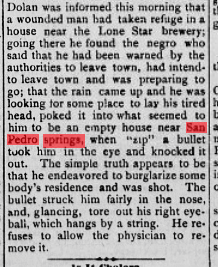
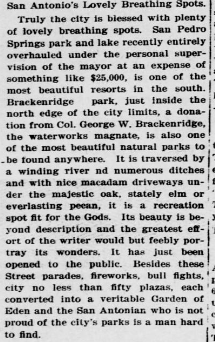
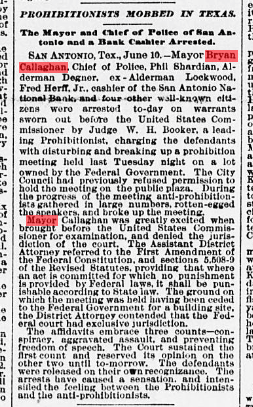
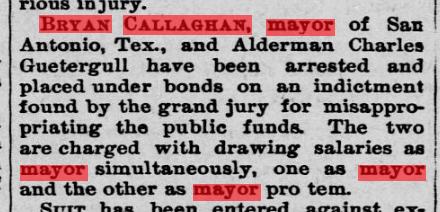
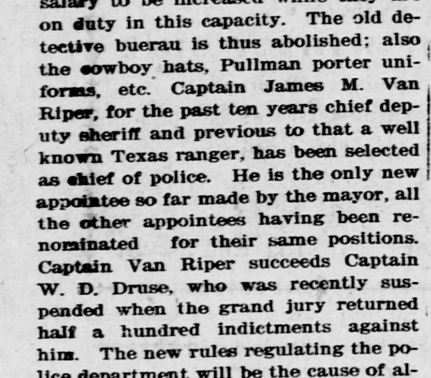
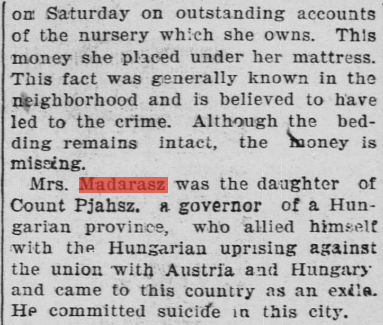
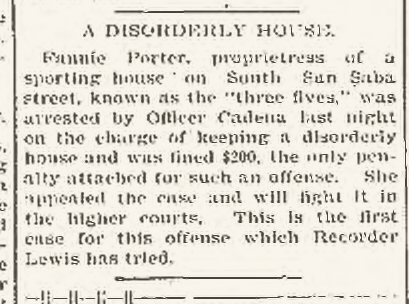
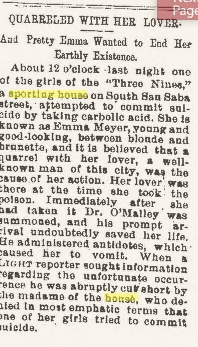
The Library of Congress – Historical Newspapers – can take you back to the late 1800’s. I needed 1901 so I found myself in good shape (except I spent hours upon hours finding interesting articles that had nothing to do with my MS, The Last Bordello.) Once I focused, ALL these articles played a pivotal role in my plot line. (I had many more, these are just a few.)

Let’s start with the secondary, still-important, characters and work our way down to Madam Fannie Porter.


The Women’s Christian Temperance Union:

screenshot-2014-11-28-14-24-12

screenshot-2014-11-28-14-37-08

screenshot-2014-11-28-14-27-17

screenshot-2014-11-23-13-59-49

screenshot-2014-11-23-13-45-34


Now, for a sense of place:

screenshot-2014-11-29-12-14-55

screenshot-2014-11-29-12-20-12


The politicians, Mayor Hicks, former Mayor Bryan Callaghan, Captain James Van Riper:

screenshot-2014-11-23-14-11-00

screenshot-2014-11-24-09-49-46

screenshot-2014-11-24-09-51-38

screenshot-2014-11-24-09-54-24

screenshot-2014-11-23-13-55-34


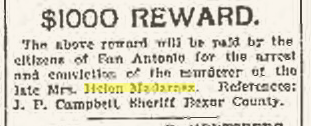
The “then” never solved murder of Helen Madarasz.

screenshot-2014-12-13-18-26-06

screenshot-2014-12-13-18-28-29

screenshot-2014-12-15-11-41-02


The outlaws:

Screenshot 2014-11-24 13.21.45

th-8

Now, Madam Fannie Porter:

screenshot-2014-11-23-12-11-09-copy


screenshot-2014-11-23-12-25-19


screenshot-2014-11-23-12-16-57-copy

screenshot-2014-11-24-12-31-46

After reading this article, I found a writer’s connection to the man Madam Fannie may have married, and the location that was plausible for meeting Butch Cassidy for the first time.


If you are writing historical fiction, The Library of Congress is a great place to start!

Keep writing,

Carolyn


Where Do Inspirations Come From?

IMG_3407.JPG

If Give You Give A Mouse A Cookie, he’s going to ask for a glass of milk. When you give him the milk, he’s probably going to ask for a straw….”

That’s what happened to me, but in a dream.

So, I took that morsel, ran with it, and didn’t “return” until five years later.

Hmm? How to make this brief?

We own our family homestead.

homestead 004

My great-great grandparents set their belonging on the land in the 1840’s and said, “das ist gut.” And it was. And it is.

In my dream, the essence of me stared into an old photo. In the frame, the couple turned to one another and smiled. Then, the screen door opened. The farmer stood in the doorway to greet his wife, but couldn’t enter.

And that’s what started the process of writing The Last Bordello.

As written in Chapter Two:

Most nights, I see Papa in my dreams. In a slower-than-life pulse, in a not-so-common four-count measure, he smiles as he grabs the knob of our screen door and opens it to enter. His movement repeats. He smiles and opens the door. Smiles and opens the door. Each time, he never enters. He never falls.

But Papa did fall; collapsed before crossing our threshold into the house his neighbors helped him to build. Four years ago now, all of the notes of Papa’s life faded away with his last breath. A stillness so loud that my ears still burned.

If only Papa hadn’t died.

I’m not living in 1901 anymore. I’m no longer in a bordello, in a lunatic asylum, or attending  a Women’s Christian Temperance Union or Suffrage meeting.

I’m in 1928. So far, it’s the cat’s pajamas. (The Moonshine Thicket– working title)

screenshot-2016-08-02-08-36-31-copy

screenshot-2016-08-02-08-55-26

Dear writers, listen to your dreams!

The Last Bordello – What it is, and isn’t

My novel, The Last Bordello, is not merely a who-dun-it. It’s a story about powerful women on opposing sides of a coin (or a bordello chit).

Unable to obtain money in other ways, some women found prostitution to be their only means of survival.

thth

The Women’s Christian Temperance Union and the Suffragettes fought to improve the lives of all women. At the time, they were seen as an opposing force to the ladies of the night. But were they?


th-5      Screenshot 2014-11-28 14.04.17

The Last Bordello depicts the struggle of both sides.

Kindle Ready Front Cover JPEG_6175044

The Last Bordello

It’s done. Finished. Inches away from publication. Whew!

Kindle Ready Front Cover JPEG_6175044

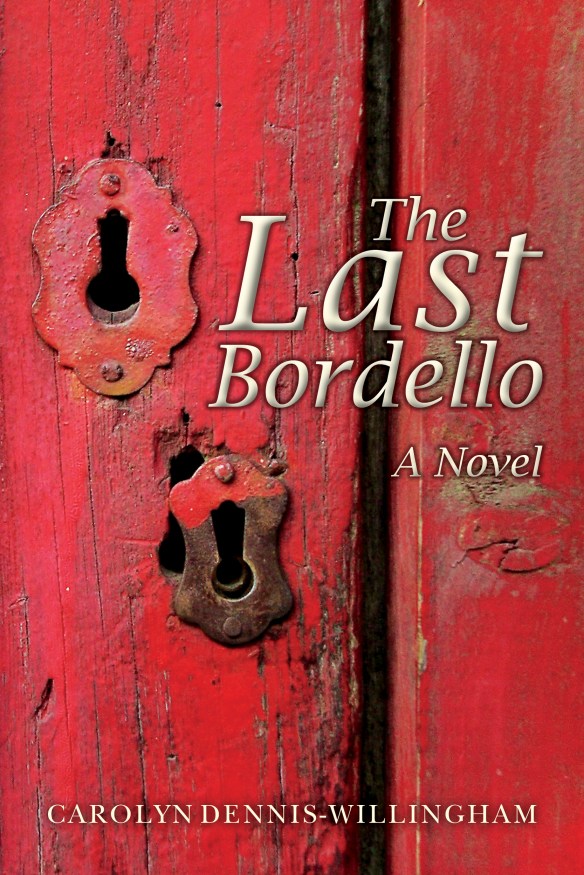
Madam Fannie Porter runs the best bordello in Texas. Just ask the outlaws she harbored and entertained for the weekend—Butch Cassidy and his Wild Bunch.

But when the gang rides off, Sadie, her best soiled dove, is left unhinged.

While the Pinkerton Detective Agency remains in hot pursuit of the outlaws, the Women’s Christian Temperance Union plans a town rally against alcohol and prostitution.

Neither is good news for Miss Fannie.

First, she will never give up a client. Second, while pondering the upcoming temperance powwow, she relies on her business savvy. She forbids her girls from attending the meeting and hires a pianist, the talented, yet virtuous, Meta, to keep the customers coming.

When a temperance woman is found murdered, Sadie becomes the key suspect. Now, Miss Fannie and Meta must discover the truth before the WCTU—or the killer—nails the red door, or another coffin, shut.

IC Blog Tour: Navigating the Writing Path

A big thank you to Clifford Rush for the invitation to the IC Publishing Summer Blog Tour.  Clifford Rush is the pen name for a husband-wife writing team who share 15 years in laws enforcement and write fast-paced crime novels. Learn more about them at http://www.cliffordrush.com


How do I start?

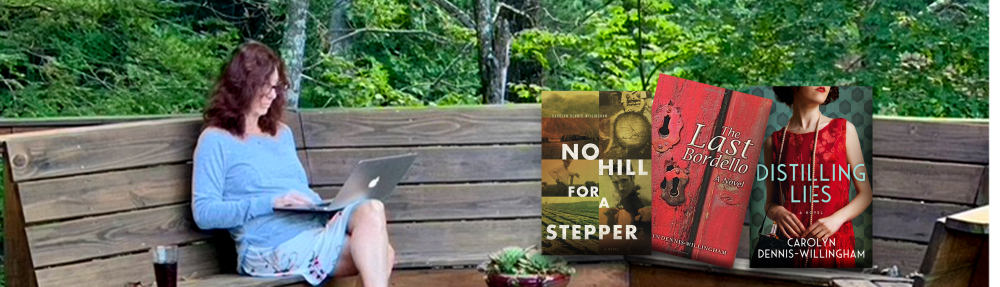
With my first novel, No Hill for a Stepper, my father and his story inspired me.

My second novel? A single image from a dream of course. The small chunk grew into the idea for a story. Then all I had to do (the “all” stated with sarcasm) was to pull out the mortar and pestle and do a bit of grinding (including my teeth when my frustration spills on my keyboard)


How do I continue?

I have no choice but to keep going. My characters tug on my sleeves and pull my hair. They want to know what will happen to them as much as I do.

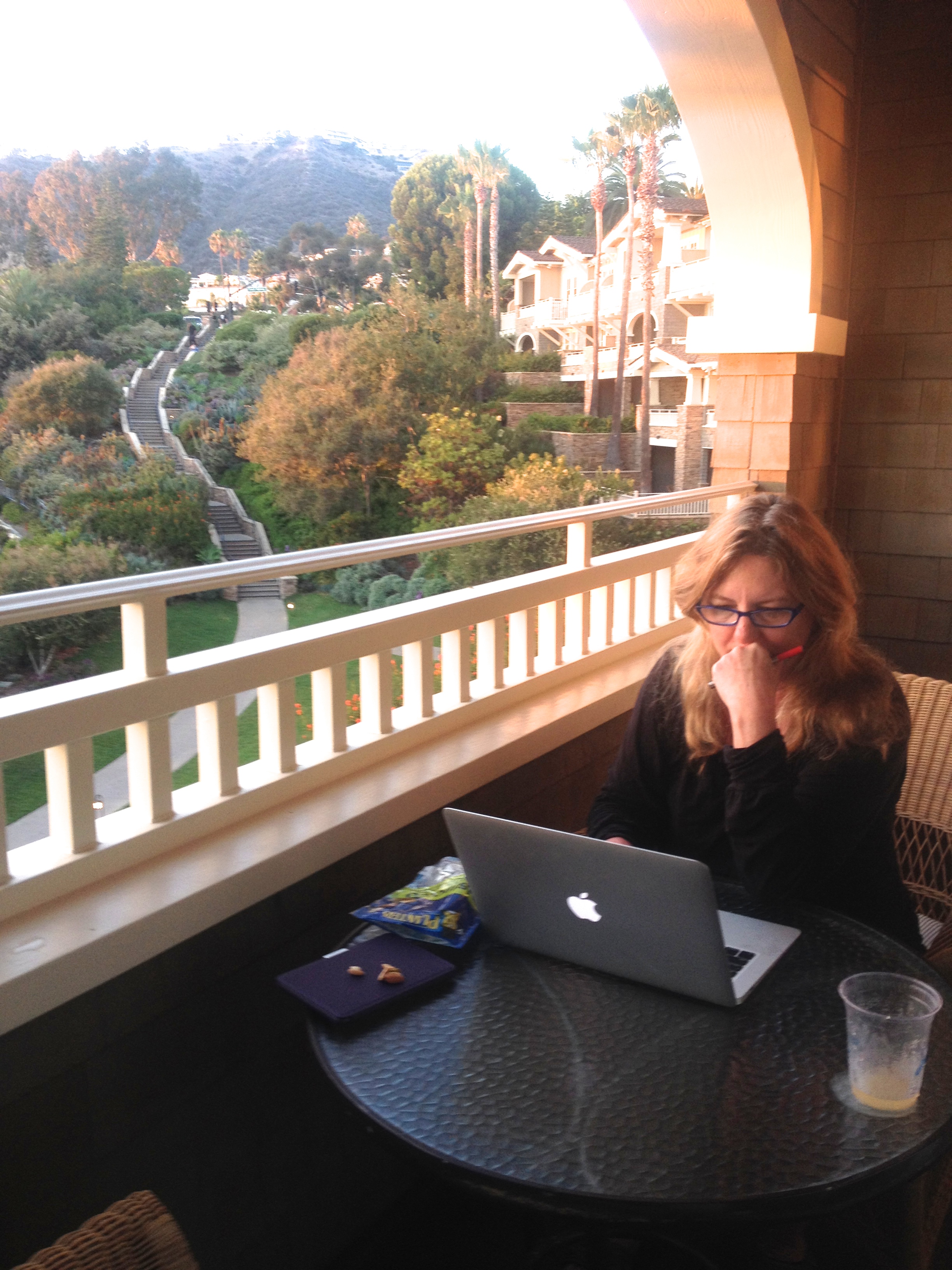
I almost always write outside where there are no walls to confine me – not a noisy coffee shop but a quiet place in my backyard where the sounds of nature are my only background music.

My new novel in progress, The Last Bordello, is set in a 1901 bordello so research is a must. I love time traveling backwards so scouring the Internet is no chore.

Research, ideas and characters jumbled together, I start sorting them out like panning for gold then only choose the best nuggets.

(this is NOT my backyard)

(this is NOT my backyard)

How do you finish your project?

I keep going. My characters’ lives depend on it.

The Challenge?

Mine is wondering if I have chosen the right structure, the best POV characters, if I have enough but not too much poetic narrative and description.

Tip: 

If you love writing, keep going. It is your passion, your yearning. It calls to you and pleads for your attention. Hug it close.

 https://twitter.com/nohillforastepR

www.cdwcreations.com

Passing the Pen

And now, I am so inspired and excited to introduce you to the following contributors who will be sharing their experiences, challenges, and tips, on navigating the writing path from start to finish. Check out their links, and watch for their blog posts on Wed, July 23rd.

Diane Andersen holds a BA in elementary education and has over twenty years classroom experience in all grade levels from pre-K through high school. She currently teaches private piano, voice and violin while pursuing her passion of writing historical fiction. Her first series based on a historic site near her home will soon be available for publication. She also has written articles for local newsletters and a few short stories including one published by Walrus Press. She lives in Illinois with her family, a cocker spaniel, a cat and a rabbit.

DianeAndersen@ladydi2u

http://dlandersen-writer.blogspot.com/


Louise Redmann is writing her second medieval romance novel about what a woman will do to protect her daughter from an evil man. She also loves to write short stories and vignettes, some of which may be found on her website:

http://www.louiseredmann.com

https://twitter.com/louiseredmann

https://www.facebook.com/louiseredmann