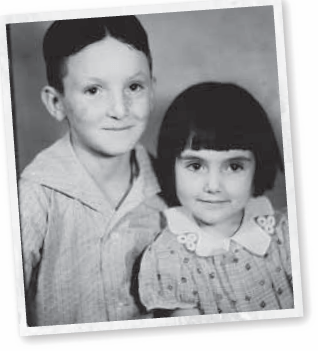
Ya gotta get to know a fella ‘fore you say you don’t like him

Pa always tells me, “Cono, if ye don’t like somebody, it’s jes’t ’cause you hadn’t got to know him well enough’s all.” That sounds like something H. would say.

“Hey, Gene. Ye want to meet a real colored man?” I ask.

“Sure, I do. Who is he?”

So I tell him what I know. I tell him about the man with dark skin and kind eyes. I tell him how he looked at me like I was a real person and not just a stupid little kid.

The next day after school, I take Gene to the barbershop.

“Hi, Mr. H.,” I say.

“Hey there Little Dennis, what you know good?”

“This here’s my friend, Gene.”

“Well, it’s a real pleasure to know ya, Gene,” and he sticks out his hand for Gene to shake. Gene waits a second, stares at H.’s big brown hand, then pumps it up and down like the handle on a water well.

“Well, now that’s a mighty fine handshake ye got there young fella. Ya play any football?”

“No sir, not really. I jes’t throw the ball around a bit’s all.”

“Gene’s real good at throwing the football, H.”

“I can tell that, I shorly can. Besides my wife, Teresa, that’s one thing I love. I love that game ’a football.”

“Why don’t ye play then?” I ask.

“Well, I s’pose that window has closed down on me already, but I been going over to the Yellowhammers’ to watch them practice. They’ve started to let me be their water boy. I sure like it, too.”

“Maybe we kin watch a game with ye sometime,” says Gene.

“Anytime, boys. I’d like that. Uh-huh, shorly would.”

“Ya like shinin’ shoes?” asks Gene.

“Shor I do. I get to talk ta all the folks. Real nice folks here in Rotan.”

The barber’s door jingles as a man walks in. He’s got enough fat on him he could be two people instead of one. After he takes off his cowboy hat and hangs it on a hook, he props up his booted feet on the footrest of the barber’s chair, and says, “Shoe shine, boy.”

“Yes, sir, it’d be my pleasure. Ya better look out now, yer shoes ’re gonna be shinin’ to the next county in jus’ a few minutes.”

The fat man doesn’t say anything. He just opens his newspaper and starts to read while H. starts to Buff his shoes.

Excerpt from No Hill for a Stepper, my father’s story.
Screenshot 2017-05-30 12.13.10.png

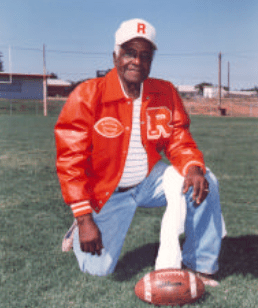
The real H. Govan

Click the H. Govan link to read more about this amazing man.

A bullet past an ear

ike-and-cono

Cono and his grandfather, Ike

Further up on the right is another house. It looks kinda like an old Wayne Dennis house, falling down on one side. Car parts litter the front yard.

“Who lives there?” I say.

“Oh, some damn white man,” says Ike.

“Still like that Cherokee part ’a ye, huh Ike?”

“Damn straight.”

We get to the bar and meet Andres, Ike’s friend. “This here’s my grandson, Cono,” Ike says.

“Pleasure,” I say, shaking his hand.

The three of us sit down at a table for four and a short little old lady in a Pink uniform comes over to take our order.

“Bring us three Pearl beers,” says Ike.

“No beer fer me,” I say.

“Still not a drinker, Cono?”

“Still not,” I say.

“Sody Pop then?”

I turn to the waitress and say, “Ye got Nehi Grape?”

She nods and says, “Be right back.”

For eleven o’clock in the morning the place is busy. The early lunch crowd has come in. Andres starts to talk while Ike listens. And I’ll be damned, Ike’s twirling his index finger around his thumb. They say an apple doesn’t fall far from the tree. This is one habit Dad’s pulled down from his father, but as far as I can see, and unfortunately, the only one.

Ike starts to talk but Andres keeps saying, “What are you saying? I can’t hear.”

Finally, after gulping down his beer, Andres says, “Hell, let’s go someplace quiet where we can talk.” I pull out my wallet to pay but Ike says, “Put that away, Cono. You need ta save yer money.” I do as I’m told, grateful of the man beside me who appreciates my hard work.

Ike and me gulp down our drinks and head down the street to a little dive of a bar, a place that doesn’t sell food.

“This is better,” says Andres. We all sit down at a table and order another round from the bartender, the only person working here.

In the middle of cow talk, a man with a black mustache that matches the color of his eyes opens the door, pulls out a pistol, and shoots a bullet right past Ike’s ears and into the mirror behind the bar. The bartender pulls out his shotgun, aims it at the shooter and says, “Jose, you drop that gun right now. This ain’t no way to settle a bar tab.” The man backs down and yells something I don’t understand, and then he leaves.

As cool as a cucumber, Ike clicks the left side of his cheek, turns to Andres and says, “Ye got another quiet place ye wanna go?”

Excerpt from No Hill for a Stepper

268971_1961463434586_3594521_n

“Gotta protect yerself at all times”

Screenshot 2017-04-25 09.49.21

I see Dad when he eyeballs the Tombstone, staring at him like he’s already pinned him in a corner. They dance around each other like feral cats waiting to pounce on a rat. Even though I can see Better now, I don’t get what they’re doing. They look like they’re play fighting.

“What’s happenin?” I ask Aunt Nolie, who’s followed me up closer to the ring.

“The Tombstone is throwin’ a few jabs.”

“What ’er jabs’?”

“Well, see, a jab ain’t usually a hard punch, but it lets the other fella know yer in the game. Jabs kinda make the other fella pay attention. They’re holdin’ their gloves up by their heads ’cause in boxin’, ye gotta protect yerself at all times.”

The Tombstone jabs, trying to get Dad’s attention. Dad’s smiling like he’s watching a funny picture show. Aunt Nolie tells me more. The Tombstone throws another jab, then a straight right, but Dad easily ducks under it and comes up with a left hook to the jaw.

“Well, lookie there, he’s done it,” says Aunt Nolie.

The Tombstone went down fast, laid out flat on his back, out like Lottie’s eye. The fight is over before the first bell had a chance to ding. Dad had been paying attention alright.

The Ranger folks, some who like Dad and some who don’t, hoot and holler that one of their own just beat a stranger, a foreigner on Ranger soil. My dad is a hero.

Dad doesn’t brag though. He smiles without his teeth showing while he stares down at the bloodied man. The referee counts to ten. The Tombstone twitches his eyeballs. Knowing he’s not dead, the referee raises Dad’s right hand up in the air and declares him the winner.

Walking home, I think about how good it was to see Dad do something good like that, something Better than drinking Pearl beer and ignoring me.

The next morning I ask, “Were ye scared Dad?”

“Naw, I ain’t afraid ’a nothing. Besides, that pissant couldn’t fight the gnats off his butt.” I laugh at the picture of the Tombstone trying to swat gnats off his hind-end while wearing bandages on both hands.

Excerpt from No Hill for a Stepper, my father’s story


The searching-for-a-penny-in-your-poop kind of Lifestyle

Screenshot 2017-04-27 09.17.30

Dad can catch a housefly in one hand without blinking, so it shouldn’t have surprised me none that his open palm slams fast across my face.

As I put my hand to my face he says, “Oh fer cryin’ out loud, Cono! I’ll swannin’, ye bit the your new toothbrush in two! Can’t ye do…”

I don’t hear the rest of what he’s saying. He’s walking away from me shaking his head back and forth. Half of my face stinging like it’s been resting on a yeller-jacket’s nest. The other half just feels sorry. How can you build up something so high, just to watch it fall down so hard? With the brush part still inside my mouth and its handle still in my hand, I think maybe I’m not so big after all. I guess I’ve found the baby Devil’s Claw after all. It’s me. I’m the baby.

I think about what I’m supposed to do with these two pieces. Maybe I can just swaller the brush part that’s not doing anything, but napping on my tongue. At least then, half of my dumbness will be covered up. Then again, Ma is always saying to me, “Cono, ye need to ‘member that anythin’ ye swaller is gonna have te come out the other end.” She reminds me about this all the time, ever since she saw me swaller a penny. No sir, she won’t let me forget about that penny. I’d picked it up off Ma’s night table, looked at it, sniffed it and after licking that penny, it just slid down my throat as easy as ice cream.

When Ma saw that penny go in my mouth and not come back out the same way, she said, “Times bein’ hard, ye gotta look at yer ba’ll movement ev’ry time ye do one. Don’t use the outhouse. Go in the fields. When ye find it, clean it off real good and hand it over to yer Mother. She needs it a whole lot more’n yer belly does.” I knew she was right. No one has much money. Most folks around here are six pennies shy of a nickel.

I watched each poop that turned up. I waited hoping it had melted and I’d already peed it out, but that didn’t happen. A few days later, when I saw that penny come out, I stared at it for a while. I just didn’t have it in me to pick it out of my poop and clean it off.

Every few days Ma would ask, “Find that penny yet, Cono?”

“No ma’m,” I’d say, “Must be makin’ its way back up.”

Now if I would have swallered that penny in front of Ike, he would have grinned and tilted his head to the side and said, “Well, aren’t you smart!” Then we both would have laughed and that would have been the end of it. Except, that ain’t the way it happened. It was Ma who saw me swaller that penny.

A few days later, Pa took me to Adam’s Grocers to get us some cheese and crackers like we always do on a Saturday. We sat on the breezy side of the house and watched the nighttime roll over to our part of town. It was so quiet, that when we opened our cheese and crackers, our crunching sounded like a two-man band. And when the music of summer bugs joined in? We were better than a revival choir.

“See this tooth right here?” Pa says jabbing his finger on a back tooth.

“Yeah?”

He puts that finger up to his nose, sniffs it and says, “It shor’ do stink!” Pa sure is funny sometimes.

Spitting out a cracker crumb with his tongue and a puff of air, Pa reached into his pocket, pulled something out and said, “Here ye go, Cono. I think this is yer’n.” I looked down and smiled at his open palm. There, sitting smack dab in the middle of his calloused farm hand was a shiny penny.

“Thanks Pa,” I said, staring at its purpose.

“Mm, hmm,” said Pa. “Ever’thin’s copacetic, ain’t it Cono?”

“It sure is Pa,” I said. Pa loves that word, “copacetic.” He told me “copacetic” means that things are tasting good on your tongue and that everything’s going to be alright.

I put the penny in my pocket to keep it safe while I ate my crackers. When we’d finished eating and as the sun was getting further and further away from the day, I ran into the house and saying real loud to my mother so Ma could hear, “Mother, I think this is yer’n.”

From my novel, No Hill for a Stepper, my father’s story. (available on Amazon)

Lifestyle

A Baby Girl Sock Without the Baby Girl

Screenshot 2017-05-03 09.21.52.png

Cono (my father) and his sister, Delma

Mother’s holding Delma in her skinny arms, and Dad walks toward them. He’s clenching his jaw, which makes his brown eyes look black. He looks different, like something bad is about to happen.

“What’re ye doin’, Wayne?” asks Mother. Dad doesn’t answer. He just keeps walking up to the porch.

“Wayne?” says Mother again. Dad snatches Delma right outta her arms, turns back around, and starts walking back to the car he had borrowed. Then all hell breaks loose.

“Wayne, what the hell do ye think you’re doin’?” says Aunt Nolie.

“It ain’t  None of yer concern, Nola,” says Dad just as calmly as if he was taking a sack of groceries to his car instead of my whimpering baby sister.

Mother cries and pleads with him to bring Delma back. She follows on his heels, pulling on his sleeve, but he shakes her off like a horsefly. When Dad puts Delma into the car, Sis starts crying too. I know she must be as confused as we are. She never goes anywhere without Mother, and now she’s watching her Mother cry and try to get to her. She’s watching me, too. I’m helpless. I can’t move. I can’t do nothing.

Dad leaves, and I can hear my baby sister crying for me to come rescue her, but I can’t. I just stand there, holding on to Mother’s skirt. Mother’s holding on to Aunt Nolie’s arm.

“That crazy son of a bitch,” says Aunt Nolie.

“I hate his guts,” sobs Mother.

Right then and there, so do I. I hate him. He has taken my little sister and left my mother’s arms raw from the friction of loneliness.

Excerpt from No Hill for a Stepper, my father’s story

Death of an Uncle

Screenshot 2017-04-27 09.17.30.png

The man lying in the bed doesn’t look anything like my Uncle Joe. His head is all swelled up, and a long, bloody cut runs from his forehead, over his eye, and down to his chin. There’s another cut over his nose, a deep gash across his forehead, and a couple more roost on his chin. Mother comes up behind me with a fresh washcloth and scares the tar outta me.

“What happened to him?”

“Punk Squares and Hammit Bashem beat ’em with knucks and a tar tool,” she says.

“What fer?”

“Don’t rightly know fer sure.”

“When’s he gonna get better?” I whisper.

“Ain’t sure he is, Cono.” I don’t really want to know why Punk and Hammit beat up my Uncle Joe. I’m afraid to.

Three days later, after plenty of moaning, my Uncle Joe dies. Earlier that morning, when he took his last breath, Aunt Nolie covered him with a Blanket and cried, “He didn’t deserve this.” She wipes her nose and eyes with the back of her hand. Except for his cuts and bruises, Uncle Joe was whiter than a bed sheet.

Now some men in a big black car come to take away my stiff-as-a-board uncle.

Excerpt from No Hill for a Stepper, my father’s story

Pictures that don’t match up

Screenshot 2017-04-25 09.49.21.png

I look in my duffle bag and see the sparring gloves Colonel Posey lent to me yesterday He had looked tired to me, like a man defeated from grief but who was still trying to stand up straight. His hair was Graying, and his eyes had lines at the corners like a map of a busy town. But his kindness sat on my chest like Pa’s and Ike’s kindness, stayed there perched like a redbird.

I thought about when Colonel Posey’s little daughter had died six months back from some disease the doctors didn’t know how to cure. I thought about Ervin Clay Carter and Gene Davis, them being dead and how hard it was on their parents and, maybe, how hard it was on me. They were just kids and life had sucked the air out of them easier than sucking a chocolate malt through a thin straw. Then I thought about Private Henderson.

After I’d told Colonel Posey about sparring with my father he said, “You know, whatever picture you’ve formed in your head about sparring with your father might not be what really happens.”

I knew what he was talking about. I thought of other pictures I’d made up in my head that didn’t match the truth, like working on that pipeline. That picture wasn’t anything like what happened. I thought of more pictures from long ago, like me owning my own guitar, or having a real conversation with my dad, or being able to reach my .22.

Drunk and crazy cowboys

Screenshot 2017-04-25 09.47.48.png

Ike, my great grandfather, at age 23


Screenshot 2017-04-25 09.50.19

Ike, “Is’ral”, in later years


According to Grady, Logchain and “Is’ral” got real liquored up, the two of them drunker than Cooter Brown. They hopped on top of Nellie, Ike’s old Gray mare, and rode straight into the lobby of the Gholson Hotel. As if that wasn’t bad enough, Nellie wore a bell around her neck that swayed back and forth like it was ringing an announcement that the two Cooter Browns were itching for havoc. Fire Chief Murphy chased after them, hollering for them to stop their nonsense. Instead of stopping, they roped ol’ Fire Chief Murphy and pulled him around a little bit. They didn’t hurt him none, but the madder the chief got, the more they laughed their fool heads off.

When Fire Chief Murphy finally freed himself from the rope, he just brushed off and mumbled, “Damn fools.” Then he walked off shaking his head like he still had dirt in his ears from really being dragged in the road.

That wasn’t the end of it. Ike told Pa he needed to go to the barbershop for a shave.

Pa says, “Aye, God, Is’ral, ain’t no need te pay Grady for a shave. I’ll do’er fer free.”

“Well,” says Ike, pondering the idea and probably clicking his cheek. “Alrighty then.”

They stumbled into the barbershop, and Ike walked over to Grady’s barber chair where he plopped down his dusty butt. Pa threw the shaving towel over him and lathered him up real good with the shaving brush. Grady said he just stepped aside and leaned up against the wall with his arms folded. He told me it was better than watching a picture show.

After the first nick, Pa slapped a little piece of paper over the cut and kept on shaving. After the second cut and the second little piece of paper Ike says, “Don’t ye be drainin’ m—” but Pa slapped a piece of paper over his mouth, so he’d shut the hell up saying, “Quit yer bellyachin’, Is’ral.”

By the time they walked out of the barbershop, Ike’s face was covered with those tiny pieces of paper. From cheek to cheek and nose to chin he looked like he’d walked out of a mummy’s tomb.

Grady said he was laughing so hard he barely heard it when Ike mumbled, “Logchain, it’s a miracle you didn’t cut my head plumb off.”

Then, those two crazy cowboys got back on that old grey mare, her bell just a ringing and rode off to who knows where to do who knows what else.

From No Hill for a Stepper, my father’s story.


Climbing out of Guilt

Screenshot 2017-04-14 09.19.29

Cono Dennis, my father, at age 18

I still think it’s a crying shame that I had to spend so much time thinking it was my fault. I guess that’s what we do sometimes, take the blame for things that just aren’t our fault, especially when we don’t know any better. But back then I didn’t have a Colonel Posey to tell me any different.

Last week on the base, that responsibility was especially tough, and I don’t feel much like I lived up to it. I was right in the middle of running a training exercise when a young private missed the rope leading down from the

I still think it’s a crying shame that I had to spend so much time thinking it was my fault. I guess that’s what we do sometimes, take the blame for things that just aren’t our fault, especially when we don’t know any better. But back then I didn’t have a Colonel Posey to tell me any different.

Last week on the base, that responsibility was especially tough, and I don’t feel much like I lived up to it. I was right in the middle of running a training exercise when a young private missed the rope leading down from the Climbing wall. He fell fifteen feet to the ground, landing wrong. We all ran over and circled him like a bunch of buzzards.

“Sergeant Dennis,” he says, “My neck. I don’t feel so good.”

“Aw, you’ll be all right son,” I told him. “They’re coming to take ye to the hospital. You’ll be all right.”

But he wasn’t. Private Henderson died later that day.

So far, almost every night since then, I imagine him lying there on that hard ground, his eyes staring into mine with confusion and fear. I’d lied to him.

Colonel Posey told me I had done nothing wrong, that it wasn’t my fault Private Henderson had died. He told me I was the best sergeant he’d had so far, told me how he appreciated me. I looked at him for a second or two until all the guilt flew off my shoulder like specks of dirt in a windstorm.

Excerpt from No Hill for a Stepper, my father’s story

Measuring up

Screenshot 2017-04-14 09.20.57

Cono, my father, age 14

You don’t really know much when you’re born, but that’s where it starts, alright, whether you like it or not. When you’re just a little suckling pig on your mamma’s teat, all you really want to know is that the teat will keep filling up so you can start suckling all over again. Once you reckon the food’s always gonna be there, you move on to wondering whether you’re gonna be kept safe from harm and warm when it’s cold. As you get a little older, you find out that maybe there isn’t always going to be enough to eat after all, and you won’t always be warm either. This is especially true if you grew up during the Great Depression in Texas, in the western part, where any stranger is sized up from boot to hat, if, that is, they’re lucky enough to own both.

Texans trust themselves first and foremost, and then maybe one or two of their kinfolk, as long as they’ve found that trust to be right as rain, if the sun can set on their words. I grew up trying to figure out who was in which category, who I could trust and who to never turn my back on. There was a lot of line crossing. I learned what I know from watching those who crossed over and the others who stayed on their own side.

I did both.

Excerpt from No Hill for a Stepper, my father’s story

Measure